
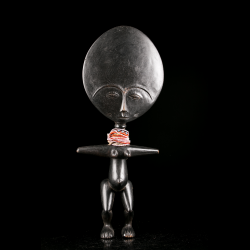


The traditional akua’ba (or akua ba) statues are iconic figurines of the Ashanti people (Ghana).
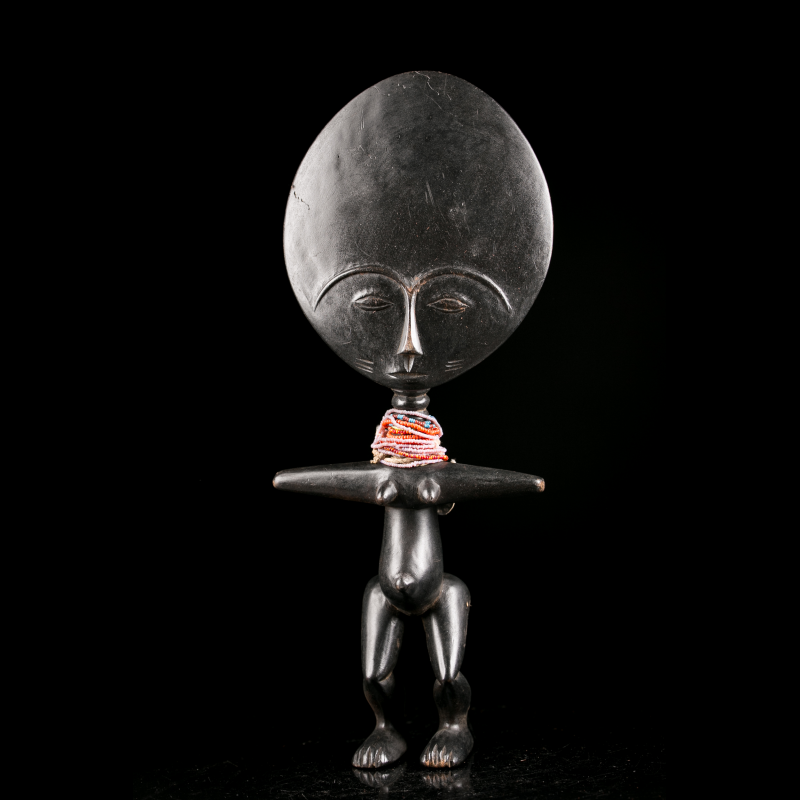
Carved from light, patinated wood (as seen here with this black patina), they represent a stylized woman with a disc-shaped head, cylindrical neck, reduced arms, tubular body, and ritual scarifications, particularly on the back of the head, where the motifs are not chosen randomly but follow a precise set of codes.
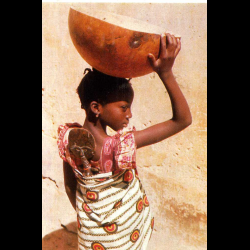
Their name means "child of Akua," the goddess of fertility. Carried on the back by pregnant women or those trying to conceive, these sacred dolls are offered at altars after consulting a diviner to ensure a healthy pregnancy and an uncomplicated birth.
Item brought in during the 1960s by its first owner who subsequently sold it.
Data sheet
The traditional akua’ba (or akua ba) statues are iconic figurines of the Ashanti people (Ghana).
Carved from light, patinated wood (as seen here with this black patina), they represent a stylized woman with a disc-shaped head, cylindrical neck, reduced arms, tubular body, and ritual scarifications, particularly on the back of the head, where the motifs are not chosen randomly but follow a precise set of codes.
Their name means "child of Akua," the goddess of fertility. Carried on the back by pregnant women or those trying to conceive, these sacred dolls are offered at altars after consulting a diviner to ensure a healthy pregnancy and an uncomplicated birth.
Item brought in during the 1960s by its first owner who subsequently sold it.