
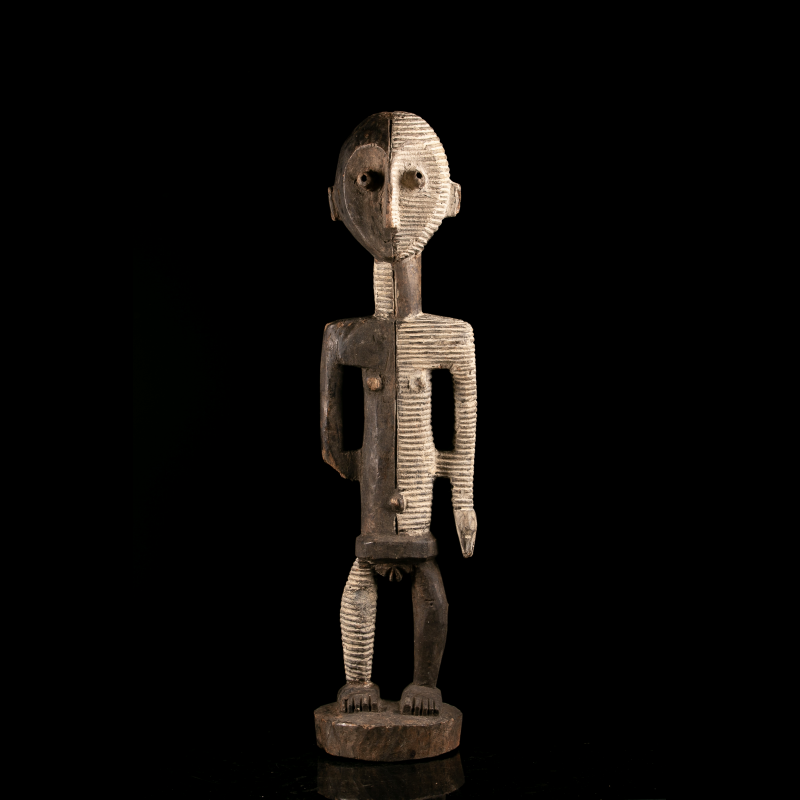
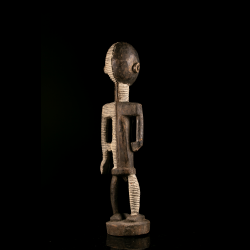
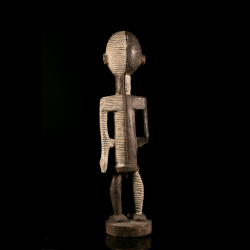
This striking anthropomorphic african art figure is attributed to the Metoko people of northeastern Democratic Republic of the Congo. It displays the distinctive features associated with the Kakungu style, celebrated for its geometric composition and symbolic surface treatment.
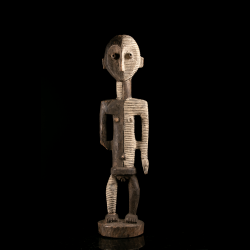
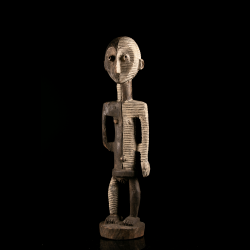
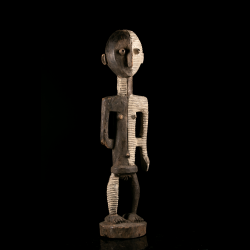
The sculpture is organised around a powerful duality: one half retains a dark patina while the other is covered with white kaolin pigment. This division extends across the face, torso and limbs, enhanced by finely carved horizontal striations that create a remarkable visual rhythm.
Its cylindrical head, projecting eyes, elongated neck and openwork arms are characteristic features of Metoko sculpture. The restrained geometry and balanced proportions give the figure an impressive sculptural presence.
Kakungu figures are generally associated with ancestor veneration and ritual practices intended to protect the community, promote fertility and maintain spiritual balance. They traditionally occupied an important place within shrines, embodying the relationship between the living and the ancestral world.
The rich aged patina, preserved kaolin traces and refined carving make this sculpture an attractive example of classical Metoko art.
Data sheet
This striking anthropomorphic african art figure is attributed to the Metoko people of northeastern Democratic Republic of the Congo. It displays the distinctive features associated with the Kakungu style, celebrated for its geometric composition and symbolic surface treatment.
The sculpture is organised around a powerful duality: one half retains a dark patina while the other is covered with white kaolin pigment. This division extends across the face, torso and limbs, enhanced by finely carved horizontal striations that create a remarkable visual rhythm.
Its cylindrical head, projecting eyes, elongated neck and openwork arms are characteristic features of Metoko sculpture. The restrained geometry and balanced proportions give the figure an impressive sculptural presence.
Kakungu figures are generally associated with ancestor veneration and ritual practices intended to protect the community, promote fertility and maintain spiritual balance. They traditionally occupied an important place within shrines, embodying the relationship between the living and the ancestral world.
The rich aged patina, preserved kaolin traces and refined carving make this sculpture an attractive example of classical Metoko art.