- Reduced price
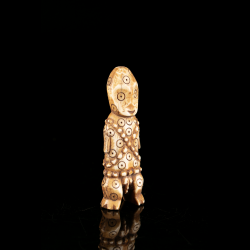
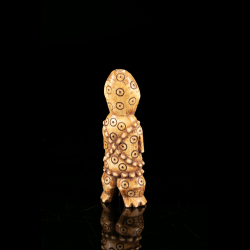
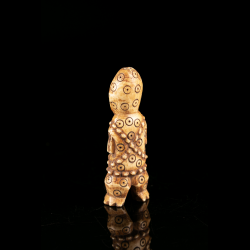
This anthropomorphic figure belongs to the Iginga tradition — plural Maginga — of the Lega people of eastern Democratic Republic of the Congo. Such small figures occupied an important place within Bwami, the male and female initiatory society that profoundly shaped Lega social, moral and spiritual life.
Bwami was organized through a succession of grades. Advancement toward the higher levels involved progressively more complex teachings concerning individual conduct, social relationships, self-discipline, wisdom and responsibility toward the community. Objects associated with Bwami were therefore far more than representations: they functioned as genuine instruments of knowledge and played an active role in initiatory instruction.
Iginga figures were particularly associated with ceremonies involving the higher grades. Displayed, handled and interpreted by experienced initiates, they could refer to exemplary individuals, particular forms of behaviour, proverbs or narrative episodes carrying moral lessons. Their meaning was therefore never contained solely in their physical appearance. It was activated through speech, gesture, song, dance and dramatic performance during initiation. Certain figures could also evoke deceased initiates and contribute to the transmission of collective memory from one generation of Bwami members to the next.
Within Lega thought, the refinement of an object could mirror the ideal of moral refinement expected of an initiate. Human figures carved in ivory, bone and other valued materials were particularly associated with advanced Bwami grades and could be entrusted to senior members of the society.
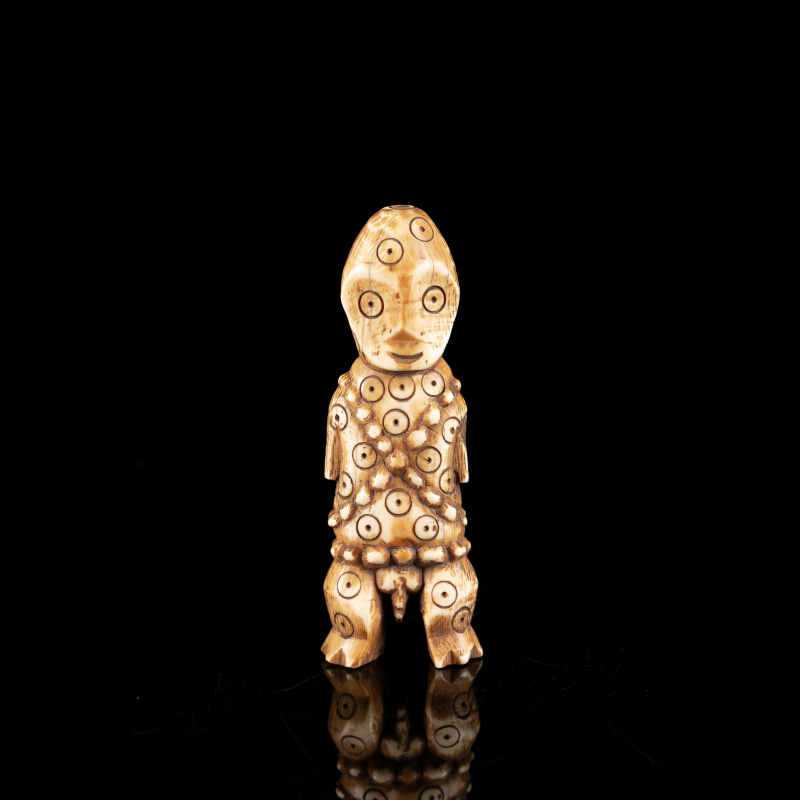
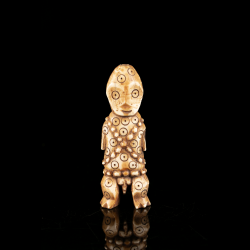
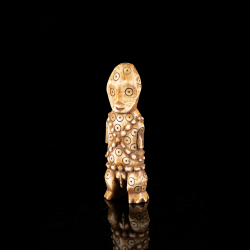
Standing 14 cm high, this example is remarkable for its exceptionally dense decoration of dot-and-circle motifs distributed across the face, torso and legs, together with several bands of raised bead-like elements running across the body. Such circular motifs occur frequently in Lega art and may evoke body markings, while also reinforcing the highly graphic character of the sculpture. The pale tone of the bone, varied patina and visible traces of handling further emphasize the intimate and prestigious nature of this initiatory object.
Data sheet
You might also like
This anthropomorphic figure belongs to the Iginga tradition — plural Maginga — of the Lega people of eastern Democratic Republic of the Congo. Such small figures occupied an important place within Bwami, the male and female initiatory society that profoundly shaped Lega social, moral and spiritual life.
Bwami was organized through a succession of grades. Advancement toward the higher levels involved progressively more complex teachings concerning individual conduct, social relationships, self-discipline, wisdom and responsibility toward the community. Objects associated with Bwami were therefore far more than representations: they functioned as genuine instruments of knowledge and played an active role in initiatory instruction.
Iginga figures were particularly associated with ceremonies involving the higher grades. Displayed, handled and interpreted by experienced initiates, they could refer to exemplary individuals, particular forms of behaviour, proverbs or narrative episodes carrying moral lessons. Their meaning was therefore never contained solely in their physical appearance. It was activated through speech, gesture, song, dance and dramatic performance during initiation. Certain figures could also evoke deceased initiates and contribute to the transmission of collective memory from one generation of Bwami members to the next.
Within Lega thought, the refinement of an object could mirror the ideal of moral refinement expected of an initiate. Human figures carved in ivory, bone and other valued materials were particularly associated with advanced Bwami grades and could be entrusted to senior members of the society.
Standing 14 cm high, this example is remarkable for its exceptionally dense decoration of dot-and-circle motifs distributed across the face, torso and legs, together with several bands of raised bead-like elements running across the body. Such circular motifs occur frequently in Lega art and may evoke body markings, while also reinforcing the highly graphic character of the sculpture. The pale tone of the bone, varied patina and visible traces of handling further emphasize the intimate and prestigious nature of this initiatory object.