
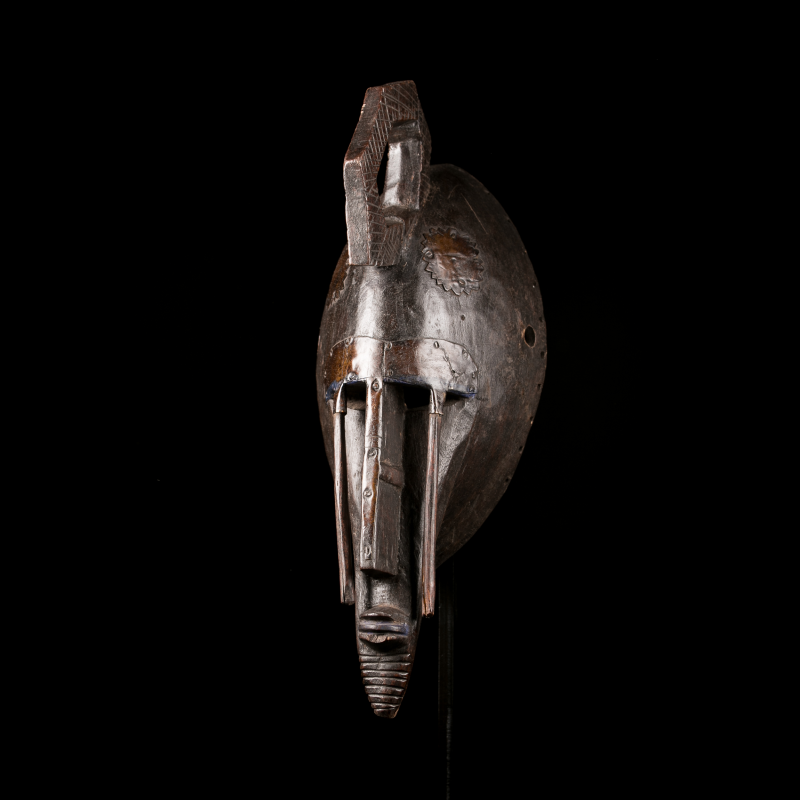
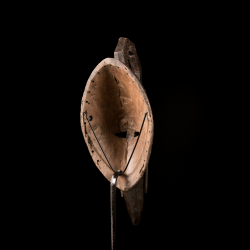
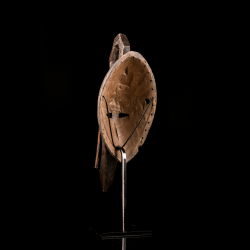
African masks originating from the Marka (Markha or Warka) people of Mali, distinguished by their elongated face, straight nose, and sometimes repoussé metal plates affixed to the wood.
Culturally related to the Bamana people, they are primarily associated with initiation ceremonies—particularly within the Ntomo society—and worn by young initiates during rites of passage and ritual performances.
Their simple design reinforces the mask's symbolic authority: acting as a mediator between the living and ancestors, it encodes social status and collective norms.
Data sheet
You might also like
African masks originating from the Marka (Markha or Warka) people of Mali, distinguished by their elongated face, straight nose, and sometimes repoussé metal plates affixed to the wood.
Culturally related to the Bamana people, they are primarily associated with initiation ceremonies—particularly within the Ntomo society—and worn by young initiates during rites of passage and ritual performances.
Their simple design reinforces the mask's symbolic authority: acting as a mediator between the living and ancestors, it encodes social status and collective norms.