
More generally, Pende masks occupy a central place in social and religious life. They are used in initiations, healing rites, funerals, and public celebrations.
Each mask represents a spirit, an ancestor, or a moral figure illustrating human virtues or failings. Styles vary by region: naturalistic faces in the West or stylized ones in the East, engraved scarifications, and white, red, or black pigments.
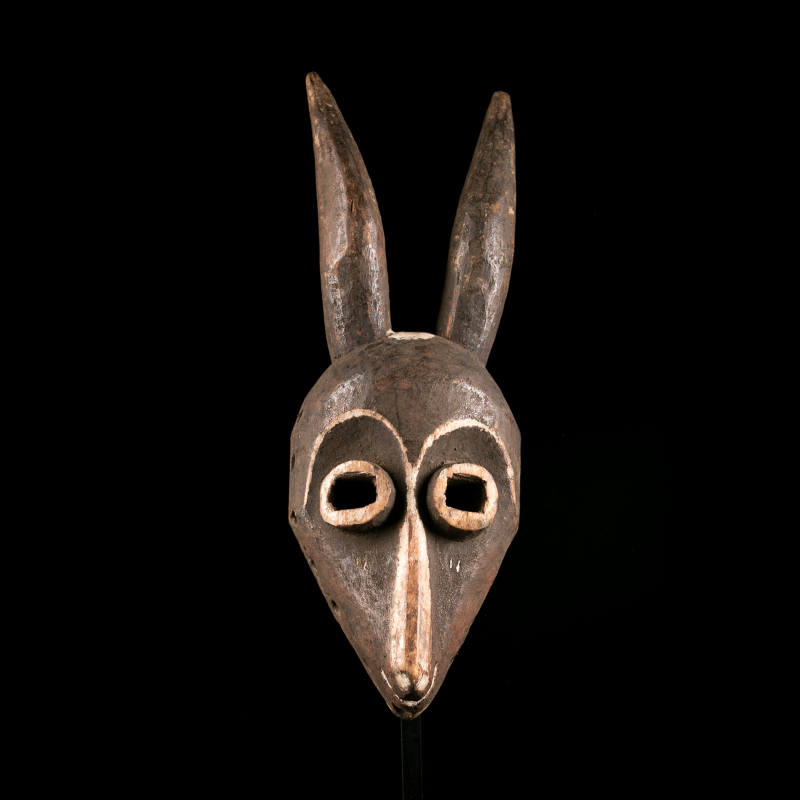
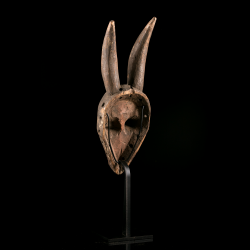
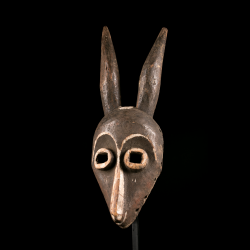
This particular traditional mask is of the thangi type, recognizable by its appendages representing ears and circular eyes. The Bapende use thangi masks in rituals of justice, community protection, and certain public ceremonies aimed at maintaining social and moral order.
Through masked dances and performances, it embodies a spiritual authority responsible for upholding collective values.
Data sheet
More generally, Pende masks occupy a central place in social and religious life. They are used in initiations, healing rites, funerals, and public celebrations.
Each mask represents a spirit, an ancestor, or a moral figure illustrating human virtues or failings. Styles vary by region: naturalistic faces in the West or stylized ones in the East, engraved scarifications, and white, red, or black pigments.
This particular traditional mask is of the thangi type, recognizable by its appendages representing ears and circular eyes. The Bapende use thangi masks in rituals of justice, community protection, and certain public ceremonies aimed at maintaining social and moral order.
Through masked dances and performances, it embodies a spiritual authority responsible for upholding collective values.