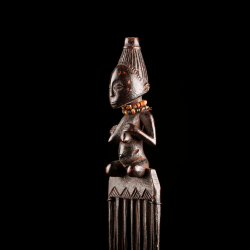
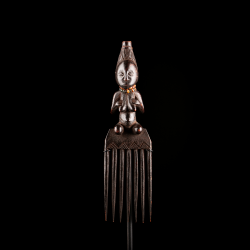
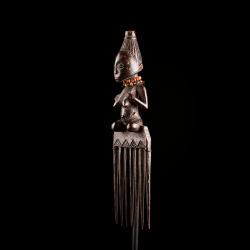
This remarkable anthropomorphic Luba comb, originating from southeastern Democratic Republic of the Congo, beautifully illustrates the refinement of Luba miniature sculpture. Both a grooming utensil and a prestigious personal ornament, combs of this type played an important role in daily life while expressing the owner's identity, beauty, and social standing.
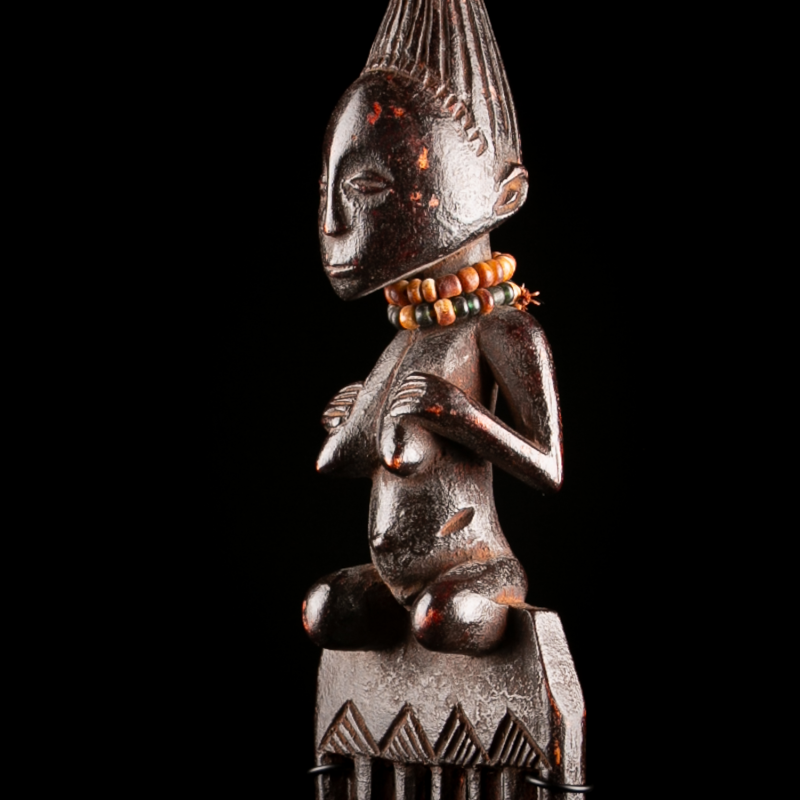
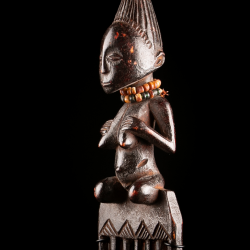
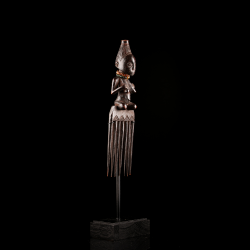
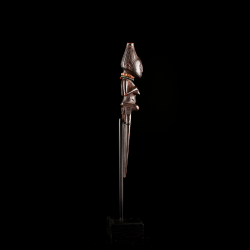
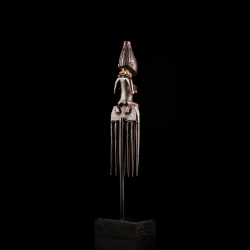
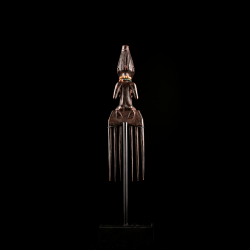
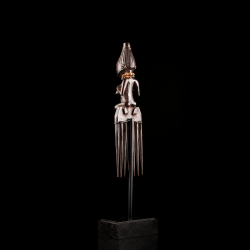
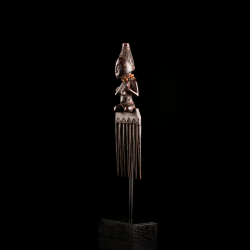
The sculpture depicts a seated female half-figure, carved with remarkable elegance. Her delicately folded arms, harmonious torso, and serene facial features embody the classical ideals of Luba aesthetics. The half-closed eyes, finely modeled mouth, and tall striated coiffure create a dignified and contemplative expression that characterizes the finest examples of Luba sculpture.
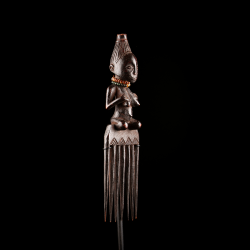
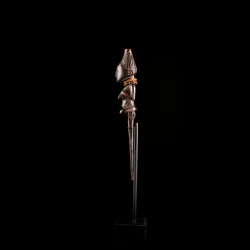
The comb's nine long teeth extend naturally from the figure, emphasizing its original function while creating a balanced and graceful composition. A finely carved geometric frieze at their base enhances the decorative rhythm of the piece. The surface displays a beautiful deep, satin-like aged patina, bearing the marks of prolonged handling and use. The old strand of trade beads preserved around the figure's neck further enhances both the charm and authenticity of the object.
Among the Luba, sculpted combs were far more than practical grooming tools. They were prestigious personal possessions reflecting ideals of beauty, femininity, fertility, and social prestige, while also demonstrating the exceptional skill of Luba master carvers.
Through its elegant proportions, refined carving, and outstanding aged patina, this comb stands as an excellent example of early Luba art and represents a distinguished addition to any collection of Central African sculpture.
Data sheet
You might also like
This remarkable anthropomorphic Luba comb, originating from southeastern Democratic Republic of the Congo, beautifully illustrates the refinement of Luba miniature sculpture. Both a grooming utensil and a prestigious personal ornament, combs of this type played an important role in daily life while expressing the owner's identity, beauty, and social standing.
The sculpture depicts a seated female half-figure, carved with remarkable elegance. Her delicately folded arms, harmonious torso, and serene facial features embody the classical ideals of Luba aesthetics. The half-closed eyes, finely modeled mouth, and tall striated coiffure create a dignified and contemplative expression that characterizes the finest examples of Luba sculpture.
The comb's nine long teeth extend naturally from the figure, emphasizing its original function while creating a balanced and graceful composition. A finely carved geometric frieze at their base enhances the decorative rhythm of the piece. The surface displays a beautiful deep, satin-like aged patina, bearing the marks of prolonged handling and use. The old strand of trade beads preserved around the figure's neck further enhances both the charm and authenticity of the object.
Among the Luba, sculpted combs were far more than practical grooming tools. They were prestigious personal possessions reflecting ideals of beauty, femininity, fertility, and social prestige, while also demonstrating the exceptional skill of Luba master carvers.
Through its elegant proportions, refined carving, and outstanding aged patina, this comb stands as an excellent example of early Luba art and represents a distinguished addition to any collection of Central African sculpture.