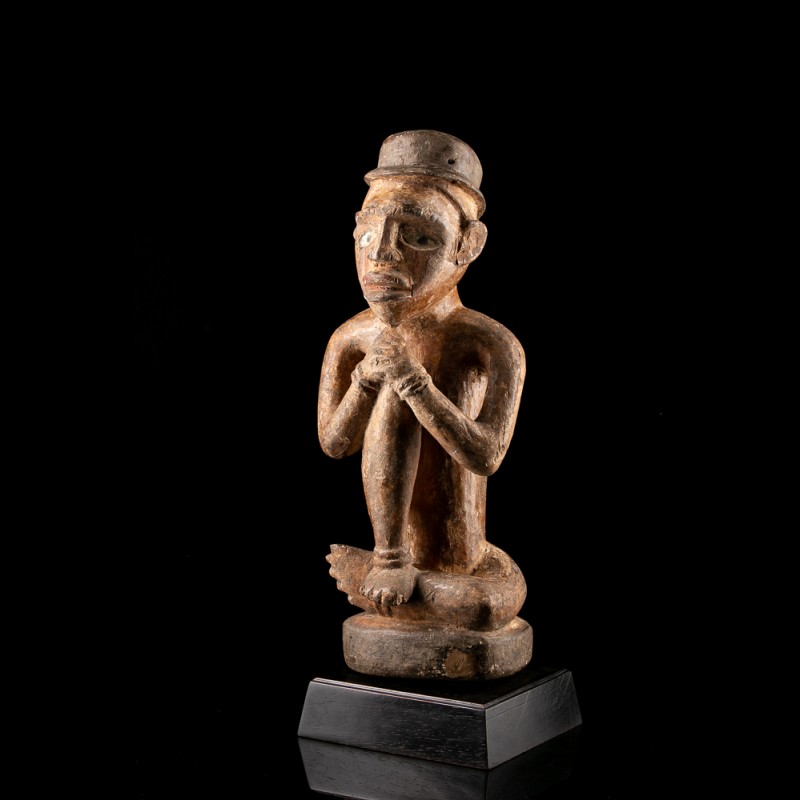
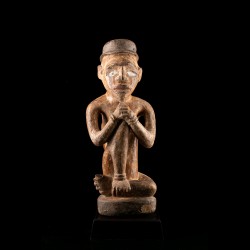
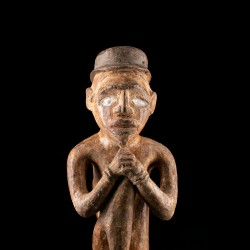
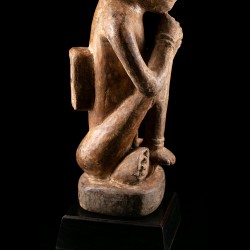
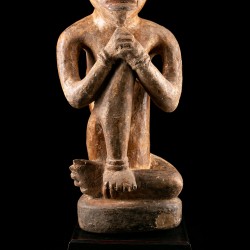
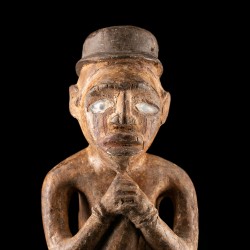
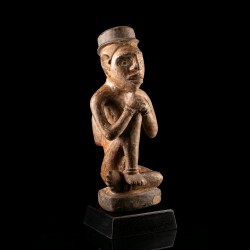
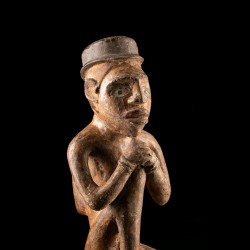
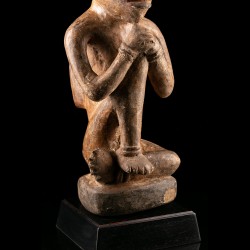
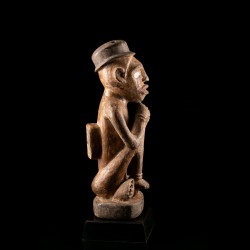
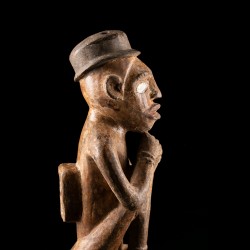
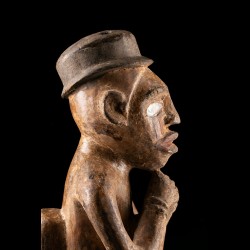
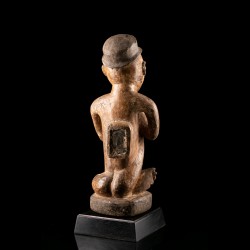
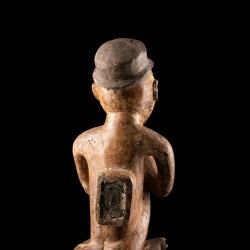
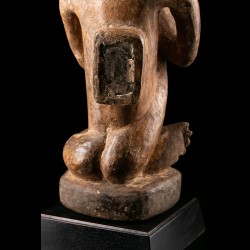
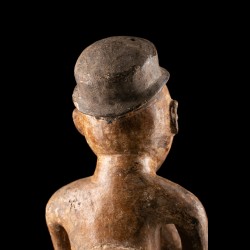
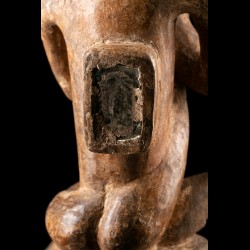
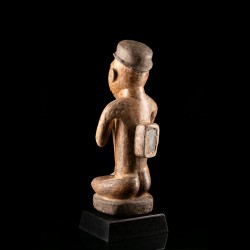
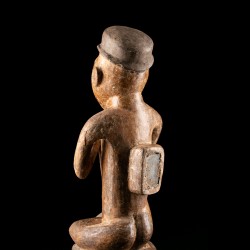
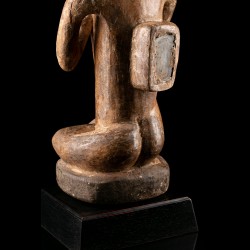
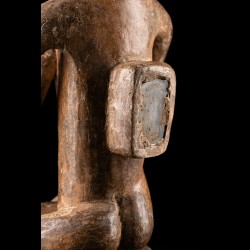

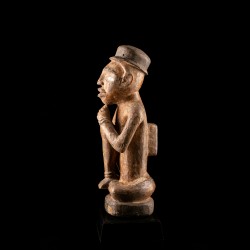
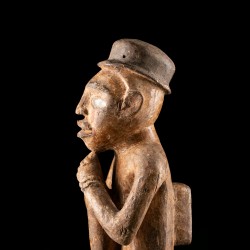

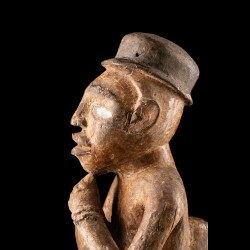
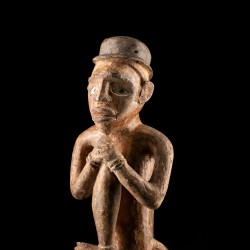
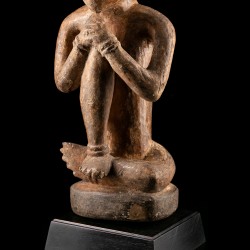
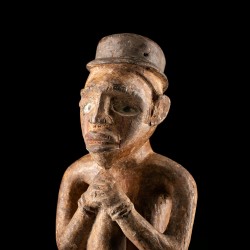
This statue is a major piece of Bakongo art. The character is represented seated, legs at right angles, hands joined under the chin. The eyes are encrusted with glass that breathes life into the character. On his head, a colonial-style headgear. The patina is clear. In the back, a surprising still sealed cavity intended to contain the magic charge. The mirror covering it should allow the diviner to detect the approach of the sorcerers and protect themselves against it.
According to the codified gestures of African art Kongo, the character rests here on a base consisting of a rough piece of wood called kinkulu. The position is that adopted in debates aimed at solving problems and is called sendama. The individual or the leader calls on the ancestors to give him attention, thus stooping before their authority. A vocabulary finely details the various postures of Kongo statuary.
Here, the head seems to be resting on the hands and is associated with circumspection: "it is the sign that the person is thinking before speaking". This is the ideal leader figure considering the issue, weighing the evidence and refraining from any comments before making a decision. This posture can also correspond to that of an ancestor meditating on death, separated from the living and his family.
The presence of the Western hat on this piece may be surprising, but it is common for the settlers to have inspired Bakongo sculptors early on. Thus, while browsing the statues of this corpus, one meets colonial representations carved in wood or ivory.
Data sheet
You might also like
This statue is a major piece of Bakongo art. The character is represented seated, legs at right angles, hands joined under the chin. The eyes are encrusted with glass that breathes life into the character. On his head, a colonial-style headgear. The patina is clear. In the back, a surprising still sealed cavity intended to contain the magic charge. The mirror covering it should allow the diviner to detect the approach of the sorcerers and protect themselves against it.
According to the codified gestures of African art Kongo, the character rests here on a base consisting of a rough piece of wood called kinkulu. The position is that adopted in debates aimed at solving problems and is called sendama. The individual or the leader calls on the ancestors to give him attention, thus stooping before their authority. A vocabulary finely details the various postures of Kongo statuary.
Here, the head seems to be resting on the hands and is associated with circumspection: "it is the sign that the person is thinking before speaking". This is the ideal leader figure considering the issue, weighing the evidence and refraining from any comments before making a decision. This posture can also correspond to that of an ancestor meditating on death, separated from the living and his family.
The presence of the Western hat on this piece may be surprising, but it is common for the settlers to have inspired Bakongo sculptors early on. Thus, while browsing the statues of this corpus, one meets colonial representations carved in wood or ivory.