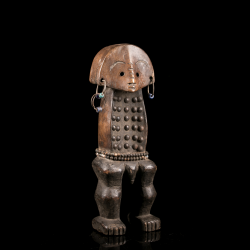
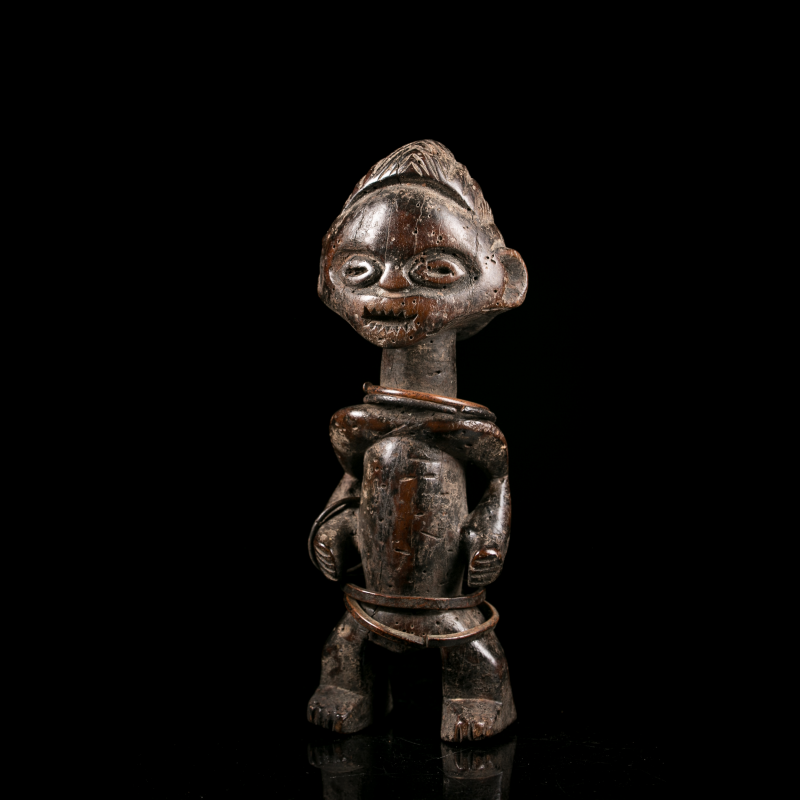
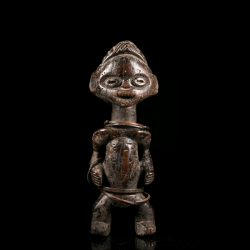
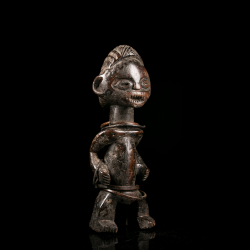
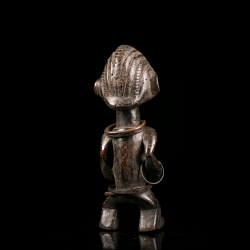
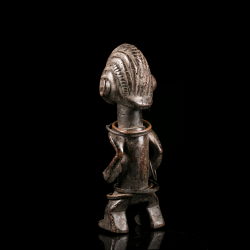
From a sculptural perspective, the Ngbaka excel in wood carving, creating stylized figures with expressive faces.
Statues, key elements in their culture, are particularly important within the Mani secret society, which they share with neighboring groups such as the Zande.
These small, abstract african art Yanda statuettes are used in initiation rites to protect against harm and illness, and to invoke magical feminine forces. After use, they are often discarded or broken, emphasizing their ephemeral ritual function rather than their decorative one.
The Ngbaka culture, originating in the north of the Democratic Republic of Congo, is rooted in ancestral traditions dating back to the 17th century. Having migrated from the Nile Valley, the Ngbaka practice agriculture, hunting, and ironworking. Their society values music, dance, and oral storytelling, with rituals that initiate young girls into womanhood.
Data sheet
You might also like
From a sculptural perspective, the Ngbaka excel in wood carving, creating stylized figures with expressive faces.
Statues, key elements in their culture, are particularly important within the Mani secret society, which they share with neighboring groups such as the Zande.
These small, abstract african art Yanda statuettes are used in initiation rites to protect against harm and illness, and to invoke magical feminine forces. After use, they are often discarded or broken, emphasizing their ephemeral ritual function rather than their decorative one.
The Ngbaka culture, originating in the north of the Democratic Republic of Congo, is rooted in ancestral traditions dating back to the 17th century. Having migrated from the Nile Valley, the Ngbaka practice agriculture, hunting, and ironworking. Their society values music, dance, and oral storytelling, with rituals that initiate young girls into womanhood.