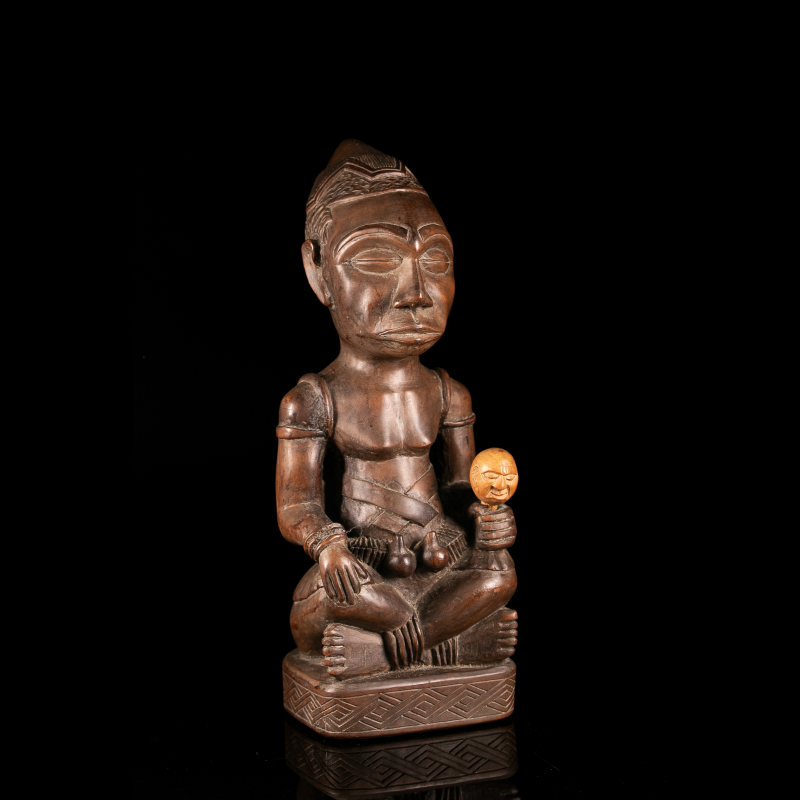
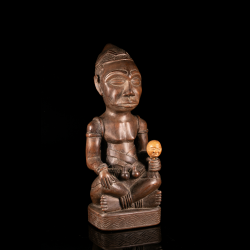
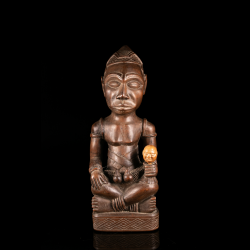
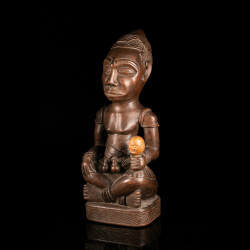
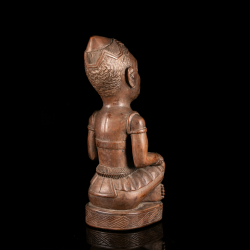
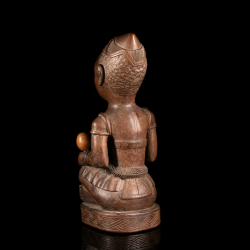
This commanding Kuba royal figure belongs to the sculptural tradition of the ndop, dynastic portraits associated with the nyim, or rulers of the Kuba kingdom. The figure is shown seated cross-legged on a rectangular base carved with geometric motifs, one of the defining poses of Kuba court sculpture. The deliberately enlarged head, hieratic bearing, arm ornaments, waist adornments and crossed bands across the torso all contribute to the visual expression of rank and authority.
In Kuba tradition, ndop figures were not intended as naturalistic likenesses. Rather, they presented an idealised and enduring image of kingship. Individual rulers could be distinguished through a personal emblem, or ibol, selected upon accession to the throne. The Metropolitan Museum traces the development of this royal sculptural genre to around 1700 and emphasises its role in dynastic memory and the continuity of Kuba rulership.
This sculpture is distinguished by an unusual iconographic detail: the sitter holds a small carved head in a contrasting lighter material. In the absence of early documentation linking this particular attribute to a documented ibol or named king, it is more accurate to catalogue the work as a Kuba figure of ndop type, rather than as an identified royal portrait. The carefully rendered coiffure, body ornaments and geometric base nevertheless give the sculpture a strong presence firmly rooted in the visual language of Kuba court art.
Data sheet
You might also like
This commanding Kuba royal figure belongs to the sculptural tradition of the ndop, dynastic portraits associated with the nyim, or rulers of the Kuba kingdom. The figure is shown seated cross-legged on a rectangular base carved with geometric motifs, one of the defining poses of Kuba court sculpture. The deliberately enlarged head, hieratic bearing, arm ornaments, waist adornments and crossed bands across the torso all contribute to the visual expression of rank and authority.
In Kuba tradition, ndop figures were not intended as naturalistic likenesses. Rather, they presented an idealised and enduring image of kingship. Individual rulers could be distinguished through a personal emblem, or ibol, selected upon accession to the throne. The Metropolitan Museum traces the development of this royal sculptural genre to around 1700 and emphasises its role in dynastic memory and the continuity of Kuba rulership.
This sculpture is distinguished by an unusual iconographic detail: the sitter holds a small carved head in a contrasting lighter material. In the absence of early documentation linking this particular attribute to a documented ibol or named king, it is more accurate to catalogue the work as a Kuba figure of ndop type, rather than as an identified royal portrait. The carefully rendered coiffure, body ornaments and geometric base nevertheless give the sculpture a strong presence firmly rooted in the visual language of Kuba court art.