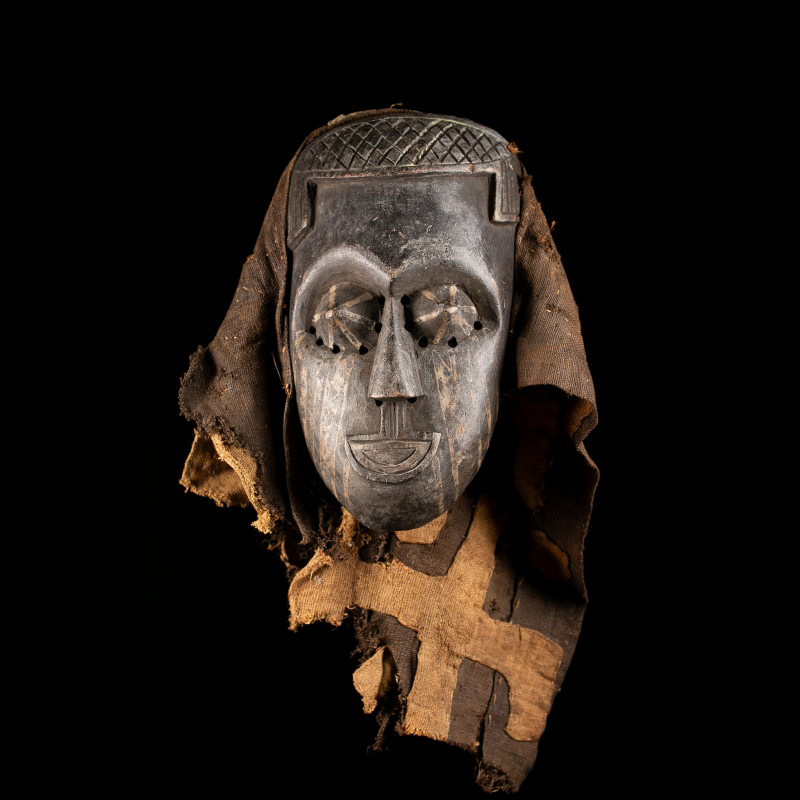
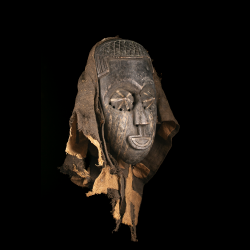
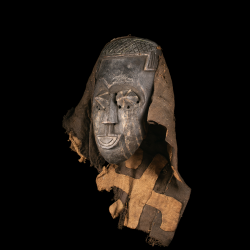
This Kuba mask combines a strongly carved wooden face with a substantial surviving textile headdress. Its dark patina, pierced eyes and restrained pale decoration around the gaze give the piece a particularly expressive presence.
Among the peoples historically united within the Kuba kingdom, a mask was not conceived as an isolated sculpture but as part of a wider performance combining carving, costume, music and dance. Kuba masquerades were associated with contexts including male initiation, funerary ceremonies and the commemoration of initiated or high-ranking members of society. Depending on their type, masks could embody ancestral figures or characters associated with social order, while also contributing to the transmission of history, values and knowledge within initiatory institutions.
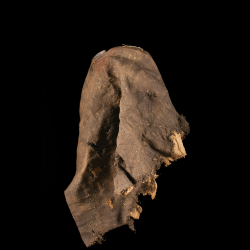
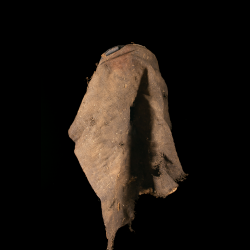
The surviving textile headdress is therefore particularly significant. It reminds us that such masks were meant to be experienced as complete ensembles, accompanied by costume elements that transformed the dancer and concealed his identity. This example thus retains a tangible connection with the performative dimension of Kuba masking traditions, extending well beyond the carved face itself.
Data sheet
You might also like
This Kuba mask combines a strongly carved wooden face with a substantial surviving textile headdress. Its dark patina, pierced eyes and restrained pale decoration around the gaze give the piece a particularly expressive presence.
Among the peoples historically united within the Kuba kingdom, a mask was not conceived as an isolated sculpture but as part of a wider performance combining carving, costume, music and dance. Kuba masquerades were associated with contexts including male initiation, funerary ceremonies and the commemoration of initiated or high-ranking members of society. Depending on their type, masks could embody ancestral figures or characters associated with social order, while also contributing to the transmission of history, values and knowledge within initiatory institutions.
The surviving textile headdress is therefore particularly significant. It reminds us that such masks were meant to be experienced as complete ensembles, accompanied by costume elements that transformed the dancer and concealed his identity. This example thus retains a tangible connection with the performative dimension of Kuba masking traditions, extending well beyond the carved face itself.