

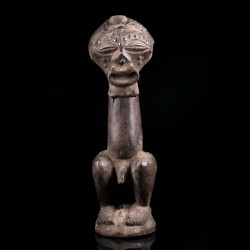
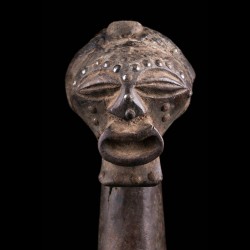
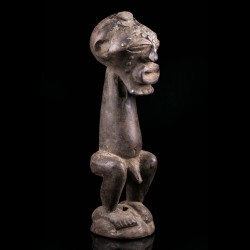
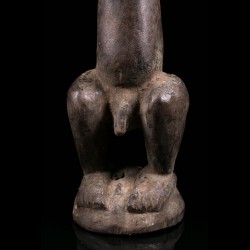
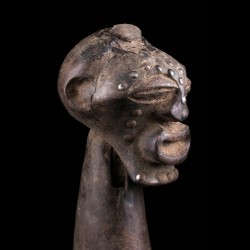
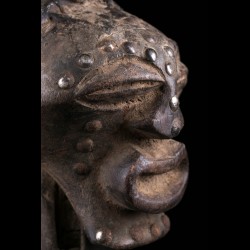

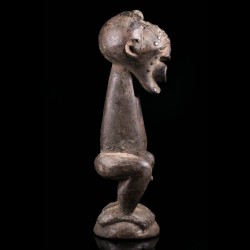
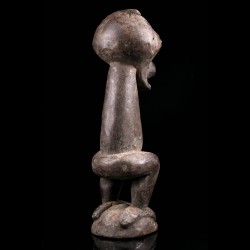


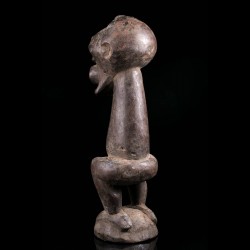
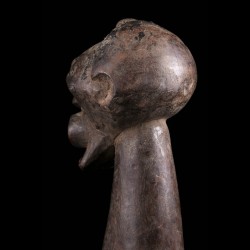
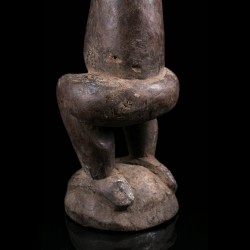
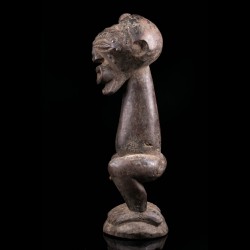

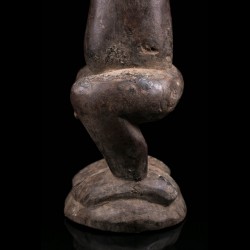


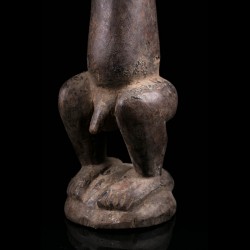
This figure, is the joint creation of a qualified sculptor and a qualified ritual practitioner, or nganga (Banganga pl.). In Central Africa, these ritual specialists are the main patrons of these objects of power. The sculptor divided the body evenly into sections defining the head, torso and legs. Each of these remains clearly visible despite the materials added by the nganga to woodcarving, whether they are fixed on the surface or incorporated into the interior.The great powers, like this example, have played a central role in the life of the Songye communities, spread over a vast territory located in the center-east of the Democratic Republic of Congo, between the Sankuru and Lubilash rivers to the west and the river Lualaba is. Acting as intercessors between the ancestral spirits and the living, the minkishi were supposed to benefit the whole community and were not the property of a single individual. The creation of an nkishi was a public event (Petridis 2009: 85) bringing together the community, a talented sculptor and an experienced nganga. The chiefs and elders ordered the nkishi and the community was commissioned to cut the tree chosen for the sculpture. The sculptor and nganga had to be well established in their respective professions. The latter has chosen the characteristics and type of wood to use, often chosen for their curative or toxic properties or for their association with certain ancestral contexts (Hersak 2010: 44). Once the wooden form carved according to standardized protocols, the nganga assembled the bishimba, a powerful material composed of animal, plant and mineral substances. The addition of this sacred material has allowed the nkishi to become a channel for the spiritual forces. According to Dunja Hersak, anthropologist and artist Songye, and based on his fieldwork in the 1970s in the region, Nganga was responsible for "bringing spiritual forces into play with the physical world" (Hersak 1986: 118) and was considered the true creator of the nkishi. SpecsOriginEx private collection NetherlandsSize37 x 12 cmDatingCirca 1960Material(s)Wood
Data sheet
This figure, is the joint creation of a qualified sculptor and a qualified ritual practitioner, or nganga (Banganga pl.). In Central Africa, these ritual specialists are the main patrons of these objects of power. The sculptor divided the body evenly into sections defining the head, torso and legs. Each of these remains clearly visible despite the materials added by the nganga to woodcarving, whether they are fixed on the surface or incorporated into the interior.The great powers, like this example, have played a central role in the life of the Songye communities, spread over a vast territory located in the center-east of the Democratic Republic of Congo, between the Sankuru and Lubilash rivers to the west and the river Lualaba is. Acting as intercessors between the ancestral spirits and the living, the minkishi were supposed to benefit the whole community and were not the property of a single individual. The creation of an nkishi was a public event (Petridis 2009: 85) bringing together the community, a talented sculptor and an experienced nganga. The chiefs and elders ordered the nkishi and the community was commissioned to cut the tree chosen for the sculpture. The sculptor and nganga had to be well established in their respective professions. The latter has chosen the characteristics and type of wood to use, often chosen for their curative or toxic properties or for their association with certain ancestral contexts (Hersak 2010: 44). Once the wooden form carved according to standardized protocols, the nganga assembled the bishimba, a powerful material composed of animal, plant and mineral substances. The addition of this sacred material has allowed the nkishi to become a channel for the spiritual forces. According to Dunja Hersak, anthropologist and artist Songye, and based on his fieldwork in the 1970s in the region, Nganga was responsible for "bringing spiritual forces into play with the physical world" (Hersak 1986: 118) and was considered the true creator of the nkishi. SpecsOriginEx private collection NetherlandsSize37 x 12 cmDatingCirca 1960Material(s)Wood