This rare Songye divination figure, known as a Katatora or Kashekesheke, is an important example of the ritual sculptures used by the Songye peoples of central Democratic Republic of the Congo. Such objects were employed by diviners to seek spiritual guidance and to interpret issues affecting individuals and communities, including health, protection, disputes, and misfortune.
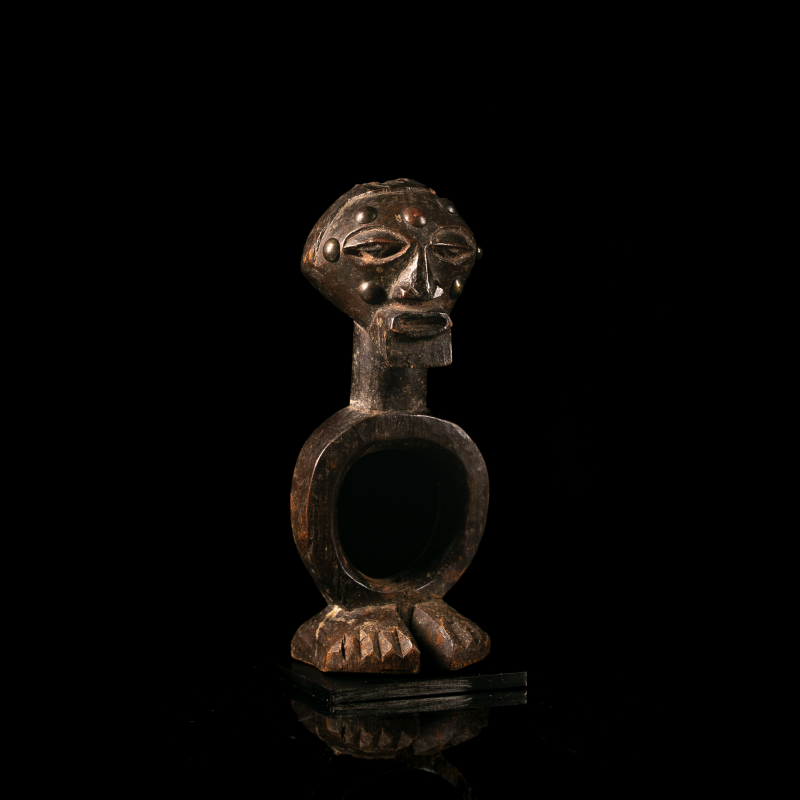
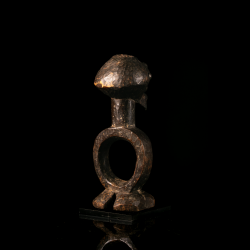
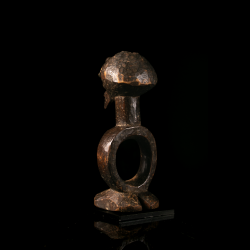
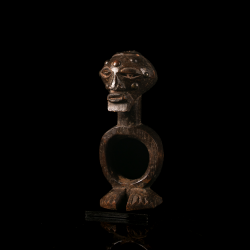
The present example is distinguished by its unusual ring-shaped body, a feature that gives the sculpture a striking and highly recognizable silhouette. The open circular form supports a disproportionately large head, creating a powerful visual balance. The face displays classic Songye stylistic features: narrow almond-shaped eyes, a prominent triangular nose, a projecting rectangular mouth, and an elongated neck. Rounded protrusions carved across the face likely refer to symbolic or magical elements associated with the figure’s divinatory function.
Standing on two sturdy feet, the sculpture embodies the expressive and direct carving style for which Songye art is renowned. Its dark patina, worn through age and ritual handling, attests to prolonged use and reinforces the authenticity of the piece. Surface wear, carving marks, and age-related irregularities contribute to its remarkable presence and historical character.
Combining ritual significance, sculptural strength, and ethnographic importance, this Songye Katatora oracle is a compelling work of traditional African art and an attractive piece for collectors of authentic African tribal sculpture.
Data sheet
You might also like
This rare Songye divination figure, known as a Katatora or Kashekesheke, is an important example of the ritual sculptures used by the Songye peoples of central Democratic Republic of the Congo. Such objects were employed by diviners to seek spiritual guidance and to interpret issues affecting individuals and communities, including health, protection, disputes, and misfortune.
The present example is distinguished by its unusual ring-shaped body, a feature that gives the sculpture a striking and highly recognizable silhouette. The open circular form supports a disproportionately large head, creating a powerful visual balance. The face displays classic Songye stylistic features: narrow almond-shaped eyes, a prominent triangular nose, a projecting rectangular mouth, and an elongated neck. Rounded protrusions carved across the face likely refer to symbolic or magical elements associated with the figure’s divinatory function.
Standing on two sturdy feet, the sculpture embodies the expressive and direct carving style for which Songye art is renowned. Its dark patina, worn through age and ritual handling, attests to prolonged use and reinforces the authenticity of the piece. Surface wear, carving marks, and age-related irregularities contribute to its remarkable presence and historical character.
Combining ritual significance, sculptural strength, and ethnographic importance, this Songye Katatora oracle is a compelling work of traditional African art and an attractive piece for collectors of authentic African tribal sculpture.