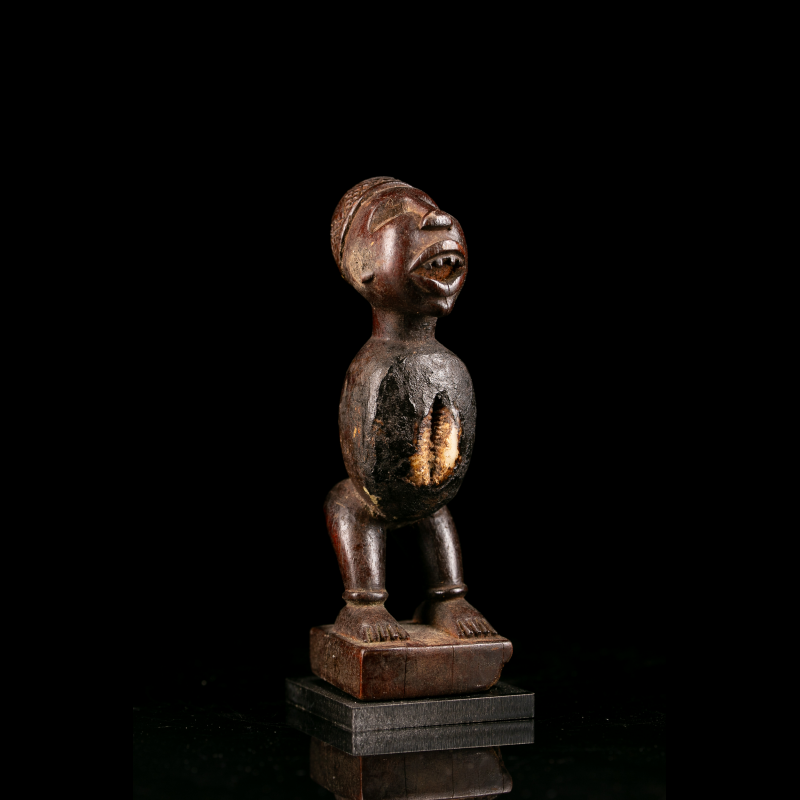
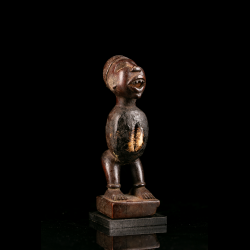
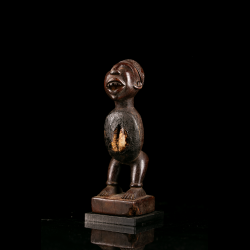
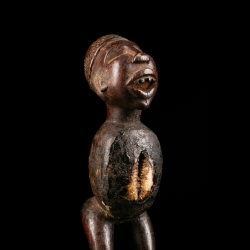
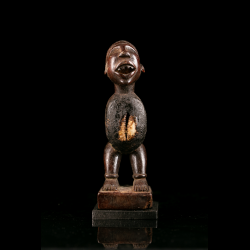
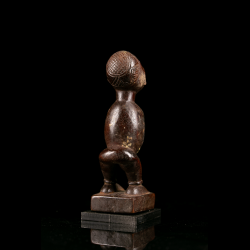
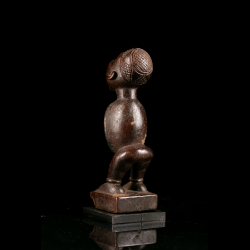
This small african Kongo fetish figure demonstrates the expressive power of Kongo sculpture through a remarkably compact form. The figure stands in a slightly bent posture that conveys energy and tension. Its oversized head, wide open mouth revealing carved teeth, and finely incised hairstyle emphasize both individuality and symbolic meaning. At the center of the abdomen is a ritual cavity containing a sacred charge, a key feature that defines the spiritual role of the object. Despite its modest size, the sculpture possesses a striking visual presence.
Within Kongo traditions, such figures belong to the broader category of nkisi, spiritually empowered objects used in a variety of ritual contexts. The cavity typically contained symbolic materials known as bilongo, selected for their protective, healing, judicial, or spiritual properties. Once activated by a ritual specialist, the figure served as a mediator between the human world and unseen forces. The open mouth, a recurring feature in Kongo art, is often associated with speech, spiritual authority, and the ability to invoke or communicate with ancestral powers.
Kongo art is renowned for combining refined stylization with profound symbolic meaning. Beyond its sculptural qualities, this nkisi figure reflects a worldview in which objects could embody spiritual energy and act as intermediaries between the living, the ancestors, and the invisible realm. It stands as an important example of the artistic and religious traditions that flourished within the historic Kongo cultural sphere.
Data sheet
You might also like
This small african Kongo fetish figure demonstrates the expressive power of Kongo sculpture through a remarkably compact form. The figure stands in a slightly bent posture that conveys energy and tension. Its oversized head, wide open mouth revealing carved teeth, and finely incised hairstyle emphasize both individuality and symbolic meaning. At the center of the abdomen is a ritual cavity containing a sacred charge, a key feature that defines the spiritual role of the object. Despite its modest size, the sculpture possesses a striking visual presence.
Within Kongo traditions, such figures belong to the broader category of nkisi, spiritually empowered objects used in a variety of ritual contexts. The cavity typically contained symbolic materials known as bilongo, selected for their protective, healing, judicial, or spiritual properties. Once activated by a ritual specialist, the figure served as a mediator between the human world and unseen forces. The open mouth, a recurring feature in Kongo art, is often associated with speech, spiritual authority, and the ability to invoke or communicate with ancestral powers.
Kongo art is renowned for combining refined stylization with profound symbolic meaning. Beyond its sculptural qualities, this nkisi figure reflects a worldview in which objects could embody spiritual energy and act as intermediaries between the living, the ancestors, and the invisible realm. It stands as an important example of the artistic and religious traditions that flourished within the historic Kongo cultural sphere.