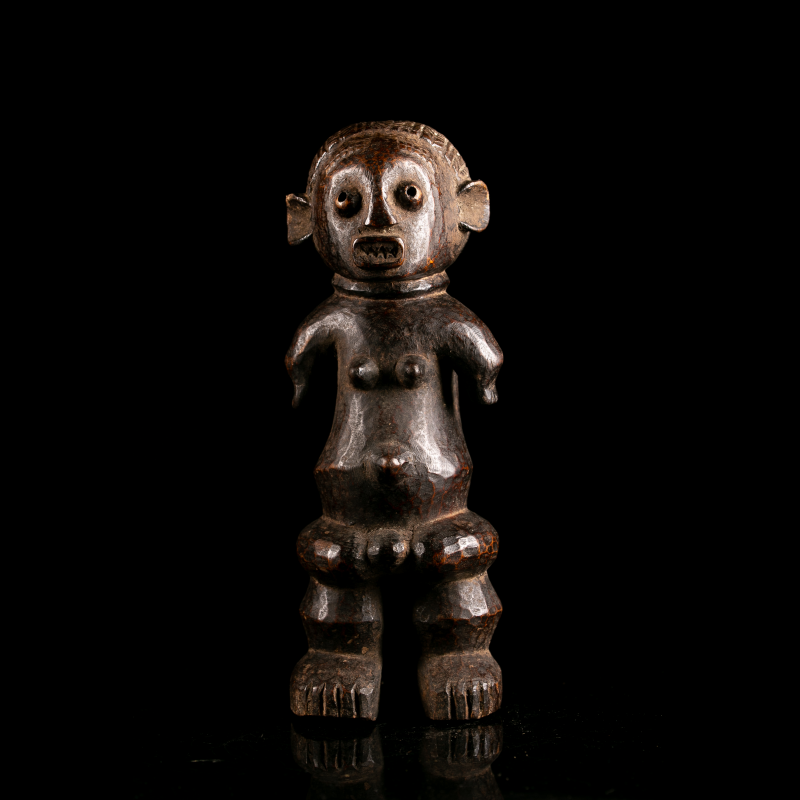
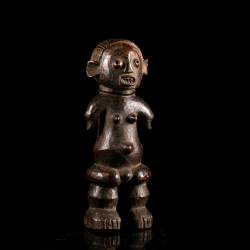
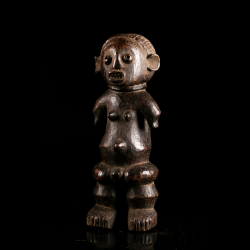
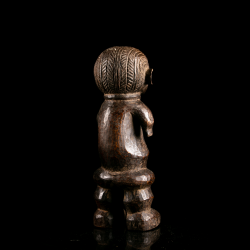
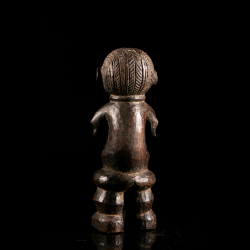
African statues and traditional Bwaka art objects, originating from the peoples primarily located in the Democratic Republic of Congo and the Central African Republic, occupy a central place in the spiritual and social practices of these communities. Their art, characterized by a restrained yet expressive aesthetic, is distinguished by geometric forms and stylized features, reflecting profound symbolism.
In their traditional context, these statues are first and foremost instruments of protection and healing. They are used in rituals intended to ward off illnesses, curses, or malevolent forces that could threaten individuals or the community. Placed in sanctuaries or handled by diviners and healers, they become essential tools in ceremonies aimed at restoring balance and harmony.
Bwaka objects also play a key role in divination, serving as intermediaries between the visible and invisible worlds. The anthropomorphic figures, often meticulously sculpted, are consulted to resolve conflicts, interpret dreams, or guide important decisions. Their presence is essential during sessions where the words of ancestors or spirits must be heard and understood.
Furthermore, these statues accompany significant moments in social life, particularly rites of passage such as initiations or funerals. They symbolize the transition between different states of existence, guiding the living and honoring the deceased.
Data sheet
You might also like
African statues and traditional Bwaka art objects, originating from the peoples primarily located in the Democratic Republic of Congo and the Central African Republic, occupy a central place in the spiritual and social practices of these communities. Their art, characterized by a restrained yet expressive aesthetic, is distinguished by geometric forms and stylized features, reflecting profound symbolism.
In their traditional context, these statues are first and foremost instruments of protection and healing. They are used in rituals intended to ward off illnesses, curses, or malevolent forces that could threaten individuals or the community. Placed in sanctuaries or handled by diviners and healers, they become essential tools in ceremonies aimed at restoring balance and harmony.
Bwaka objects also play a key role in divination, serving as intermediaries between the visible and invisible worlds. The anthropomorphic figures, often meticulously sculpted, are consulted to resolve conflicts, interpret dreams, or guide important decisions. Their presence is essential during sessions where the words of ancestors or spirits must be heard and understood.
Furthermore, these statues accompany significant moments in social life, particularly rites of passage such as initiations or funerals. They symbolize the transition between different states of existence, guiding the living and honoring the deceased.