Traditional Pende Mbuya Masks: The Art of Laughter and Satire Among the Kiwoyo
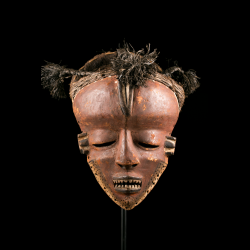
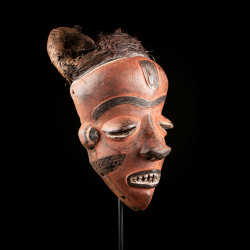
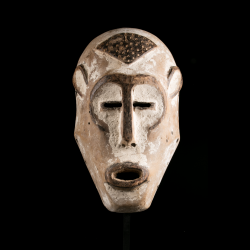
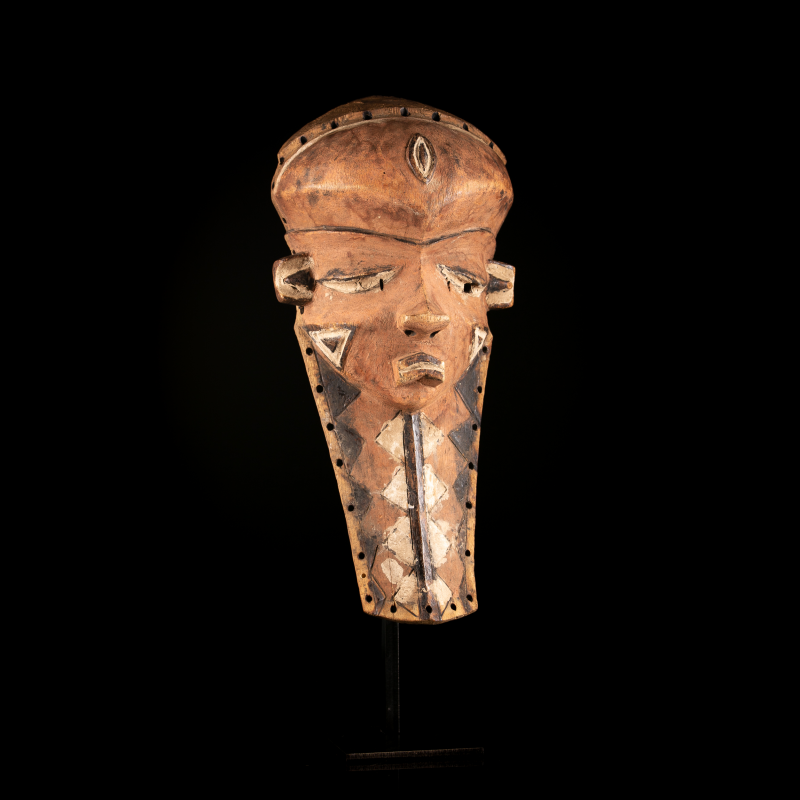
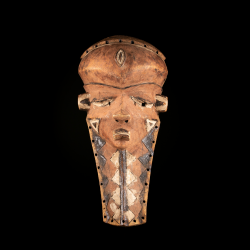
Among the artistic treasures of Central Africa, Pende Mbuya masks, and more specifically the Kiwoyo masks, hold a special place. Originating in the western Democratic Republic of Congo, these masks are distinguished by their unrestrained expressiveness and their unique social role. Unlike sacred or ritual masks, the Kiwoyo masks embody the spirit of comedy and social commentary, transforming ceremonies into spectacles where laughter becomes a tool for cohesion and social regulation.
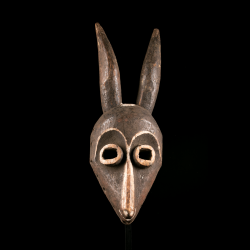
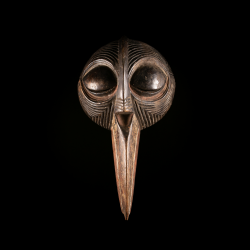
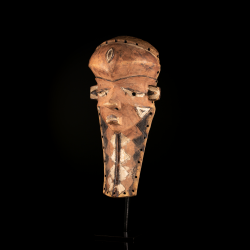
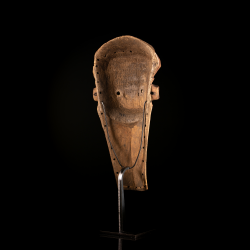
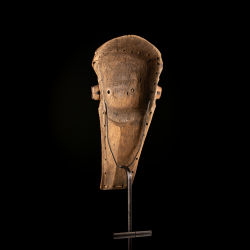
The Kiwoyo masks, recognizable by their exaggerated features—bulging eyes, twisted mouth, prominent nose—are carved from lightweight wood, often painted in bright colors.
Their grotesque aesthetic is not accidental: it aims to caricature human foibles, conflicts, or behaviors deemed inappropriate within the village. Worn during masked dances called mbuya, these masks allow dancers to perform satirical skits, where every gesture and grimace is a commentary on community life.
What is fascinating about Kiwoyo masks is their ability to blend humor and depth. They do more than simply entertain: they educate, remind people of social norms, and defuse tensions through satire. Collectors and museums, such as the Royal Museum for Central Africa in Tervuren and the Metropolitan Museum of Art, emphasize their artistic and anthropological value. These masks, often passed down through generations, bear witness to a tradition where art serves as a mirror to society.
Data sheet
You might also like
Traditional Pende Mbuya Masks: The Art of Laughter and Satire Among the Kiwoyo
Among the artistic treasures of Central Africa, Pende Mbuya masks, and more specifically the Kiwoyo masks, hold a special place. Originating in the western Democratic Republic of Congo, these masks are distinguished by their unrestrained expressiveness and their unique social role. Unlike sacred or ritual masks, the Kiwoyo masks embody the spirit of comedy and social commentary, transforming ceremonies into spectacles where laughter becomes a tool for cohesion and social regulation.
The Kiwoyo masks, recognizable by their exaggerated features—bulging eyes, twisted mouth, prominent nose—are carved from lightweight wood, often painted in bright colors.
Their grotesque aesthetic is not accidental: it aims to caricature human foibles, conflicts, or behaviors deemed inappropriate within the village. Worn during masked dances called mbuya, these masks allow dancers to perform satirical skits, where every gesture and grimace is a commentary on community life.
What is fascinating about Kiwoyo masks is their ability to blend humor and depth. They do more than simply entertain: they educate, remind people of social norms, and defuse tensions through satire. Collectors and museums, such as the Royal Museum for Central Africa in Tervuren and the Metropolitan Museum of Art, emphasize their artistic and anthropological value. These masks, often passed down through generations, bear witness to a tradition where art serves as a mirror to society.