
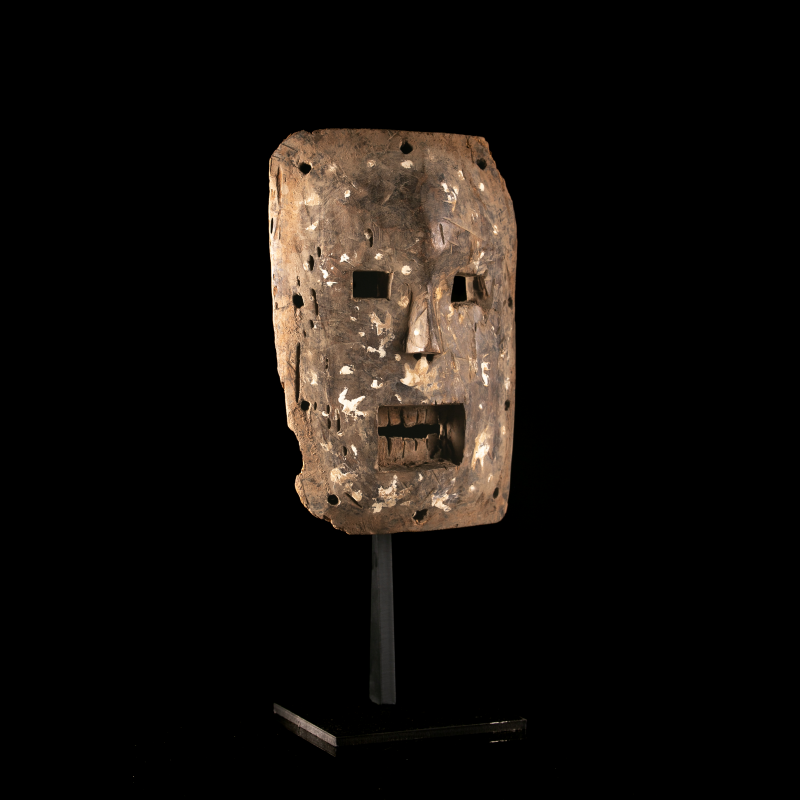
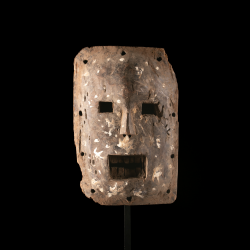
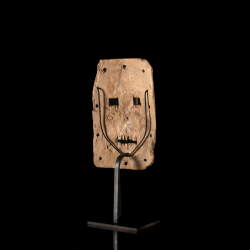
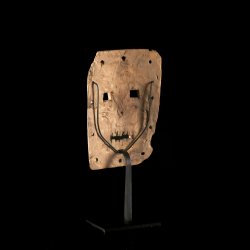
This remarkable Kumu mask, also known as Nsembu or Ibole, embodies a particularly powerful expression of traditional sculpture from the Democratic Republic of the Congo. Its striking anthropomorphic appearance, bold geometric construction and deeply weathered surface give the work an imposing sculptural presence.
The face is elongated and almost rectangular, with volumes reduced to their most essential forms. Two quadrangular eye openings frame a narrow, projecting nose, while the widely opened mouth reveals a distinctive arrangement of carved teeth. This dramatic facial expression creates a compelling balance between formal simplicity and visual intensity.
The wooden surface displays a richly textured patina, combining dark brown and earthy tones with scattered traces of pale pigments. Numerous marks of wear, surface irregularities and signs of age contribute to the mask's distinctive character. Small perforations distributed around its perimeter suggest an earlier attachment system, probably used to secure the mask to its costume or supporting elements.
The deliberate reduction of facial features to bold geometric shapes gives this sculpture an aesthetic of remarkable directness. The contrast between the rectangular eyes, projecting nose and open, tooth-filled mouth produces an expressive intensity that is characteristic of the visual appeal of Kumu masks.
Through its powerful expression, architectural simplicity and richly aged surface, this Nsembu / Ibole mask represents a distinctive example of traditional Congolese sculpture. A compelling work for collectors of early African masks, Central African art and the artistic traditions of the Democratic Republic of the Congo.
Data sheet
This remarkable Kumu mask, also known as Nsembu or Ibole, embodies a particularly powerful expression of traditional sculpture from the Democratic Republic of the Congo. Its striking anthropomorphic appearance, bold geometric construction and deeply weathered surface give the work an imposing sculptural presence.
The face is elongated and almost rectangular, with volumes reduced to their most essential forms. Two quadrangular eye openings frame a narrow, projecting nose, while the widely opened mouth reveals a distinctive arrangement of carved teeth. This dramatic facial expression creates a compelling balance between formal simplicity and visual intensity.
The wooden surface displays a richly textured patina, combining dark brown and earthy tones with scattered traces of pale pigments. Numerous marks of wear, surface irregularities and signs of age contribute to the mask's distinctive character. Small perforations distributed around its perimeter suggest an earlier attachment system, probably used to secure the mask to its costume or supporting elements.
The deliberate reduction of facial features to bold geometric shapes gives this sculpture an aesthetic of remarkable directness. The contrast between the rectangular eyes, projecting nose and open, tooth-filled mouth produces an expressive intensity that is characteristic of the visual appeal of Kumu masks.
Through its powerful expression, architectural simplicity and richly aged surface, this Nsembu / Ibole mask represents a distinctive example of traditional Congolese sculpture. A compelling work for collectors of early African masks, Central African art and the artistic traditions of the Democratic Republic of the Congo.