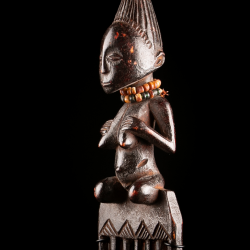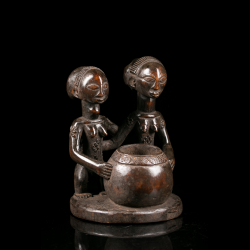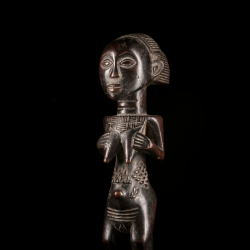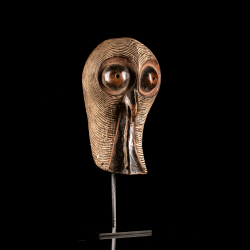
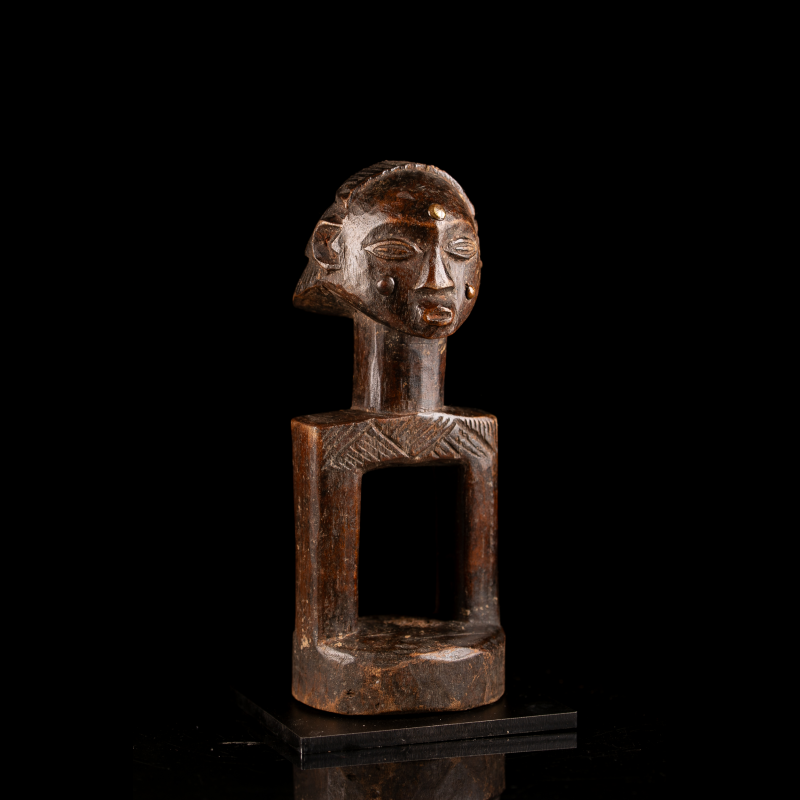
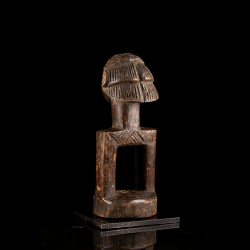
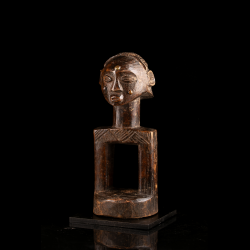
In traditional African art, katatora (or kashekesheke) oracles occupy a central place in the spiritual and social tradition of the Luba people, in the Democratic Republic of Congo.
These sacred objects are manipulated by diviners to question ancestors and spirits. Their name, katatora, evokes the idea of “what is thrown” or “scattered”, reflecting their ritual use: the elements are thrown onto a surface, and their arrangement reveals messages interpreted as answers to the questions asked.
In the Luba cosmogony, oracles serve as a bridge between the visible world and the invisible, allowing conflicts to be resolved, guiding important decisions (marriages, travel, harvests) or diagnosing illnesses. Their practice, passed down from generation to generation, embodies the collective wisdom and memory of ancestors. Katatora are not simple fun tools, but symbols of the balance between the individual, the community and the sacred.
Today, despite external influences, these oracles remain a strong marker of identity, recalling the persistence of traditional knowledge in a changing world. Their use, often discreet, testifies to the resilience of a culture where the spiritual and the everyday intertwine.
Data sheet
You might also like
In traditional African art, katatora (or kashekesheke) oracles occupy a central place in the spiritual and social tradition of the Luba people, in the Democratic Republic of Congo.
These sacred objects are manipulated by diviners to question ancestors and spirits. Their name, katatora, evokes the idea of “what is thrown” or “scattered”, reflecting their ritual use: the elements are thrown onto a surface, and their arrangement reveals messages interpreted as answers to the questions asked.
In the Luba cosmogony, oracles serve as a bridge between the visible world and the invisible, allowing conflicts to be resolved, guiding important decisions (marriages, travel, harvests) or diagnosing illnesses. Their practice, passed down from generation to generation, embodies the collective wisdom and memory of ancestors. Katatora are not simple fun tools, but symbols of the balance between the individual, the community and the sacred.
Today, despite external influences, these oracles remain a strong marker of identity, recalling the persistence of traditional knowledge in a changing world. Their use, often discreet, testifies to the resilience of a culture where the spiritual and the everyday intertwine.