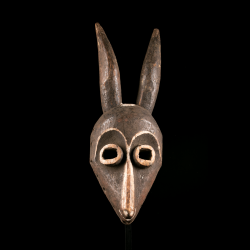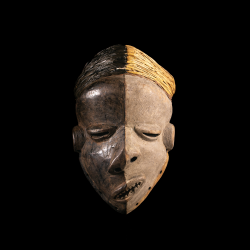
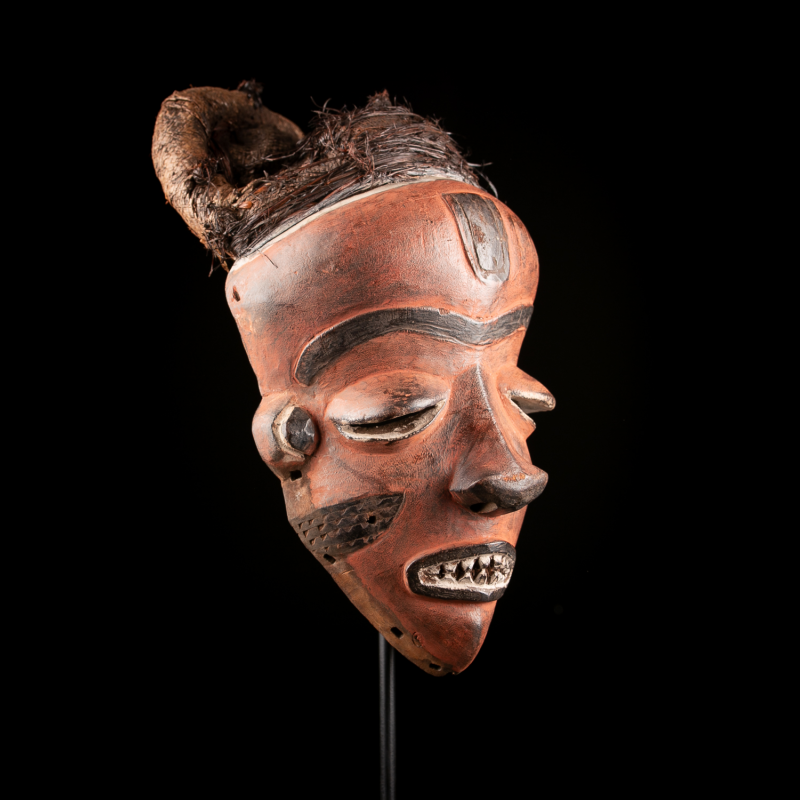
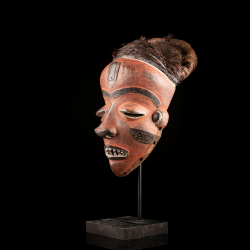
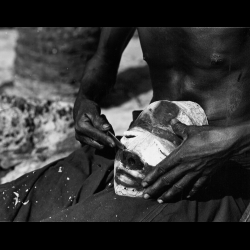
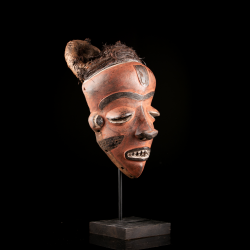
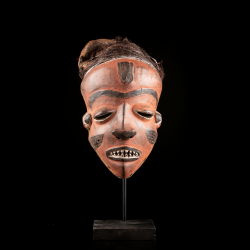
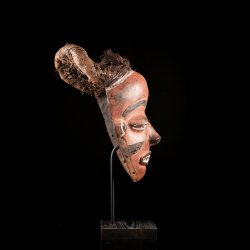
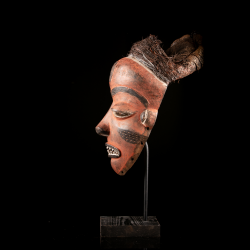
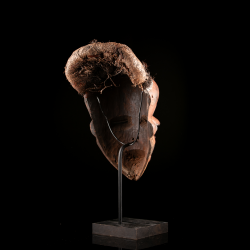
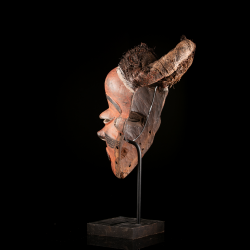
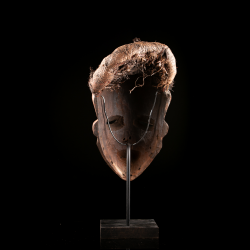
Masks occupy a central place in the tribal culture of the Bapende (sing. Pende), a people established since the 17th century in the southwest of the Democratic Republic of Congo.
These masks, called mbuya, are used during various ceremonies, including initiation rites and ritual dances.
They embody a variety of characters, reflecting social archetypes, ancestral spirits or mythological figures.
Pende masks are distinguished by their expressiveness often supported by the use of brightly colored pigments, and their stylistic diversity.
Some have naturalistic features, while others adopt more stylized or abstract forms.
This variety reflects the evolution of African Pende art, particularly under the influence of colonization, a period during which an increased naturalism was observed in the central Pende masks.
Data sheet
You might also like
Masks occupy a central place in the tribal culture of the Bapende (sing. Pende), a people established since the 17th century in the southwest of the Democratic Republic of Congo.
These masks, called mbuya, are used during various ceremonies, including initiation rites and ritual dances.
They embody a variety of characters, reflecting social archetypes, ancestral spirits or mythological figures.
Pende masks are distinguished by their expressiveness often supported by the use of brightly colored pigments, and their stylistic diversity.
Some have naturalistic features, while others adopt more stylized or abstract forms.
This variety reflects the evolution of African Pende art, particularly under the influence of colonization, a period during which an increased naturalism was observed in the central Pende masks.