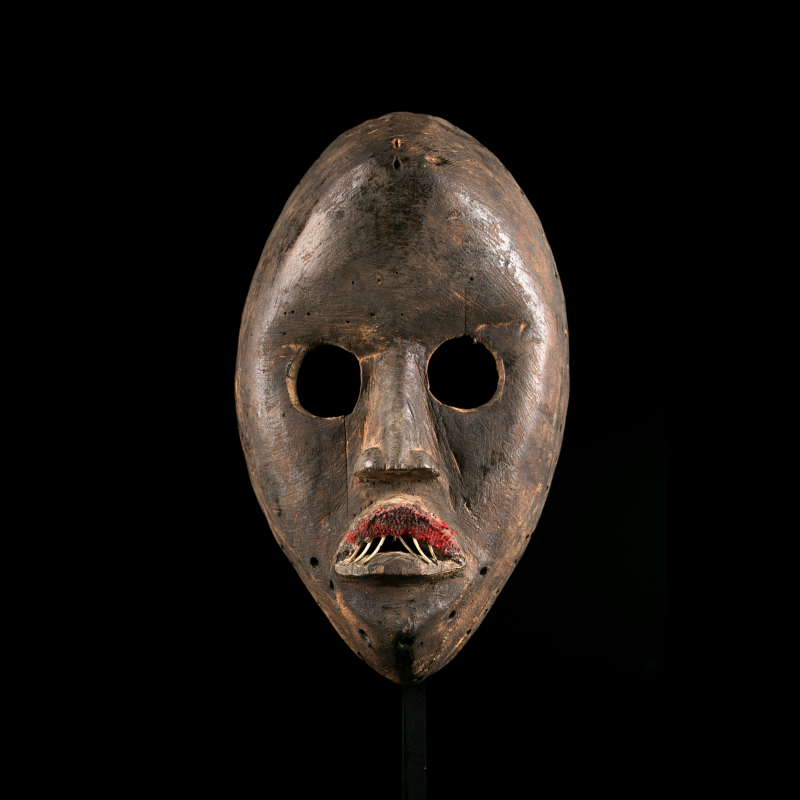




Dan masks, originating from western Ivory Coast and Liberia, occupy a central place in the spiritual and social life of the communities of the eponymous ethnic group.
These traditional art objects, far more than mere sculptures, embody spirits or invisible forces, called "gle" or "ge." Their use is closely linked to initiation rituals, funeral ceremonies, and conflict resolution.
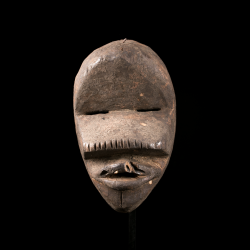
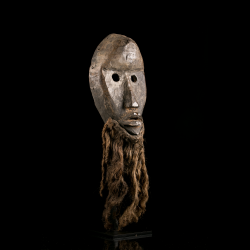
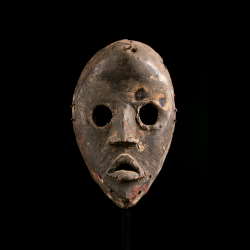
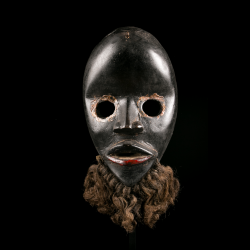
Dan masks are distinguished by their refined style and striking expressiveness. Often oval, with a high forehead, almond-shaped eyes, and a small or closed mouth, they symbolize wisdom and restraint.
Some, like the "deangle" (or "gunye ge") masks, are characterized by a smooth, glossy patina, achieved through years of rubbing with oils and pigments.
Others, rarer, display more angular features or scarifications, reflecting the diversity of clans and ritual functions.
In Dan culture, these masks are not worn randomly: they appear during sacred dances, where the dancer, hidden under a raffia tunic, embodies the spirit of the mask. These performances, often held at night, aim to ease tensions, honor ancestors, or mark the passage to adulthood. The mask then becomes a mediator between the living and the invisible world, a guarantor of social equilibrium.
Data sheet
You might also like
Dan masks, originating from western Ivory Coast and Liberia, occupy a central place in the spiritual and social life of the communities of the eponymous ethnic group.
These traditional art objects, far more than mere sculptures, embody spirits or invisible forces, called "gle" or "ge." Their use is closely linked to initiation rituals, funeral ceremonies, and conflict resolution.
Dan masks are distinguished by their refined style and striking expressiveness. Often oval, with a high forehead, almond-shaped eyes, and a small or closed mouth, they symbolize wisdom and restraint.
Some, like the "deangle" (or "gunye ge") masks, are characterized by a smooth, glossy patina, achieved through years of rubbing with oils and pigments.
Others, rarer, display more angular features or scarifications, reflecting the diversity of clans and ritual functions.
In Dan culture, these masks are not worn randomly: they appear during sacred dances, where the dancer, hidden under a raffia tunic, embodies the spirit of the mask. These performances, often held at night, aim to ease tensions, honor ancestors, or mark the passage to adulthood. The mask then becomes a mediator between the living and the invisible world, a guarantor of social equilibrium.