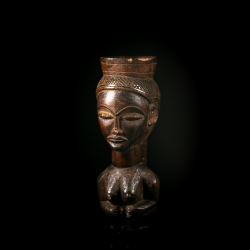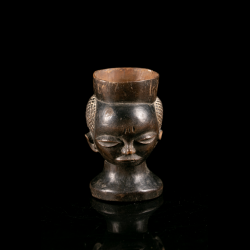
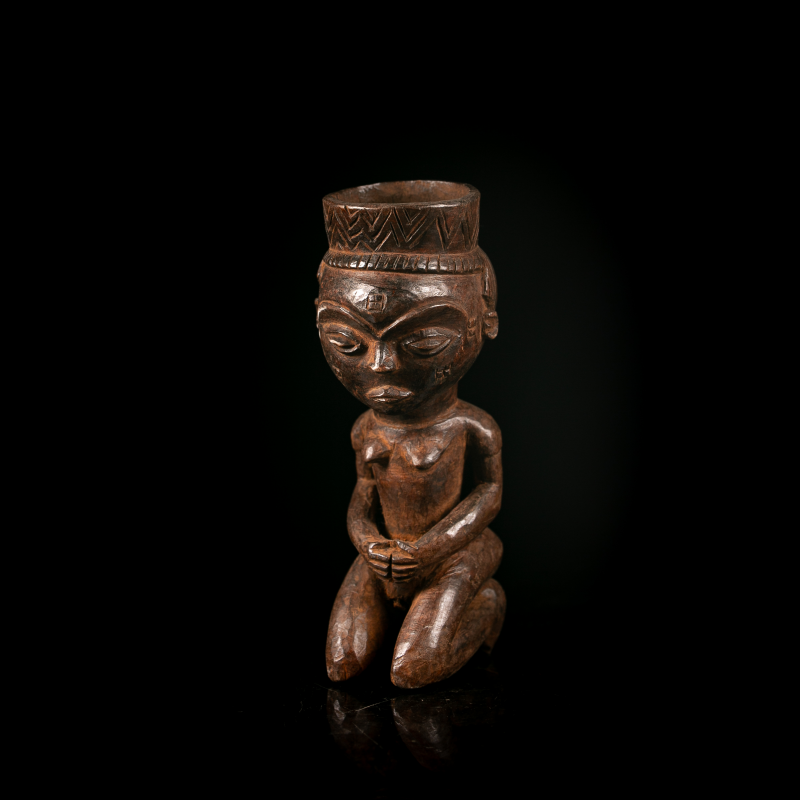
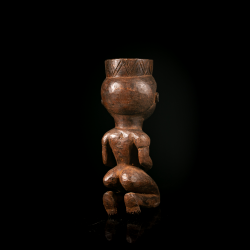
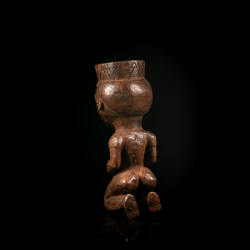
This elegant anthropomorphic cup is attributed to the Pende people of the southwestern Democratic Republic of the Congo. Carved from a single block of wood, it combines a kneeling human figure with a cylindrical vessel, illustrating the refined sculptural tradition of the Pende.
The figure is depicted in a calm kneeling posture with hands joined before the body, conveying a sense of respect, contemplation or offering. The container, hollowed directly into the head, transforms the sculpture into both a functional object and an expressive work of art.
The face displays characteristic Pende features, including elongated almond-shaped eyes beneath pronounced brows, a slender nose, small lips and geometric scarification motifs carved on the forehead and cheeks. The carefully rendered hairstyle is crowned by a decorative band of incised chevron patterns surrounding the opening of the vessel.
Among the Pende, carved vessels could serve ceremonial purposes or hold substances associated with ritual, medicinal or social practices. Like many objects from this artistic tradition, they reflect the close relationship between everyday function and symbolic representation.
Its harmonious proportions, refined carving and rich wood patina make this anthropomorphic cup an outstanding example of traditional Central African sculpture. It is equally suited to an African art collection or as a striking decorative object in a contemporary interior.
Data sheet
You might also like
This elegant anthropomorphic cup is attributed to the Pende people of the southwestern Democratic Republic of the Congo. Carved from a single block of wood, it combines a kneeling human figure with a cylindrical vessel, illustrating the refined sculptural tradition of the Pende.
The figure is depicted in a calm kneeling posture with hands joined before the body, conveying a sense of respect, contemplation or offering. The container, hollowed directly into the head, transforms the sculpture into both a functional object and an expressive work of art.
The face displays characteristic Pende features, including elongated almond-shaped eyes beneath pronounced brows, a slender nose, small lips and geometric scarification motifs carved on the forehead and cheeks. The carefully rendered hairstyle is crowned by a decorative band of incised chevron patterns surrounding the opening of the vessel.
Among the Pende, carved vessels could serve ceremonial purposes or hold substances associated with ritual, medicinal or social practices. Like many objects from this artistic tradition, they reflect the close relationship between everyday function and symbolic representation.
Its harmonious proportions, refined carving and rich wood patina make this anthropomorphic cup an outstanding example of traditional Central African sculpture. It is equally suited to an African art collection or as a striking decorative object in a contemporary interior.