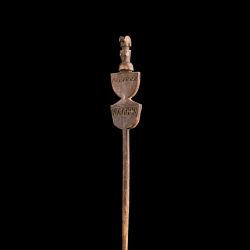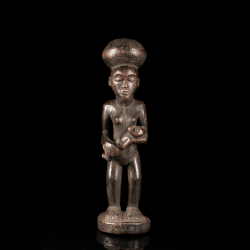
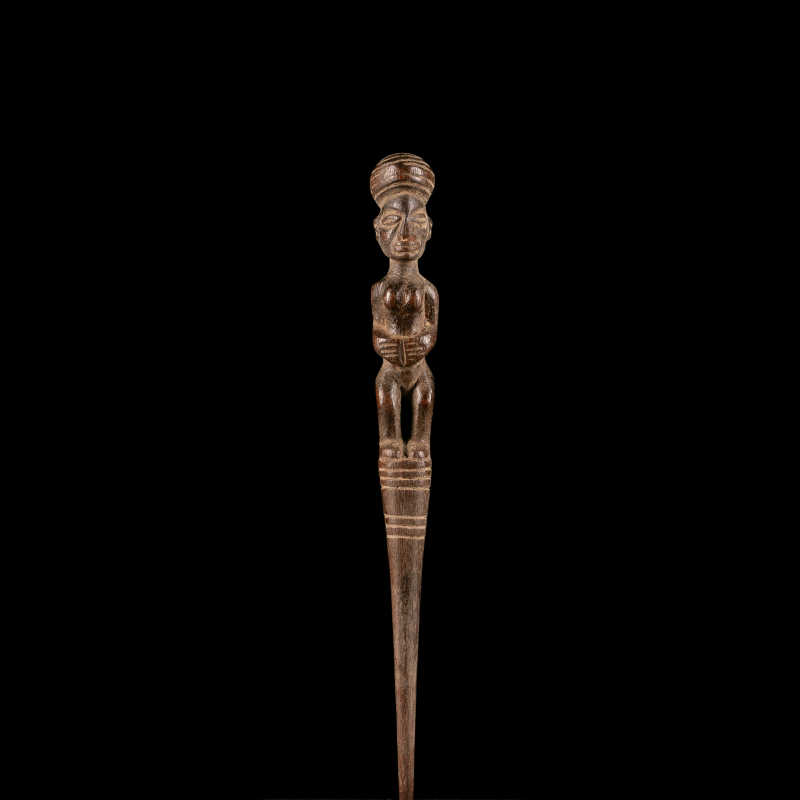
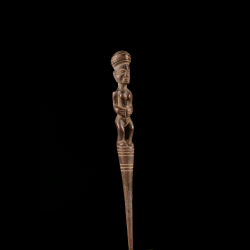
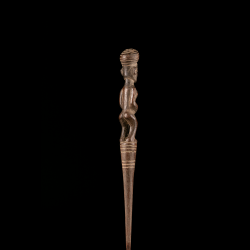
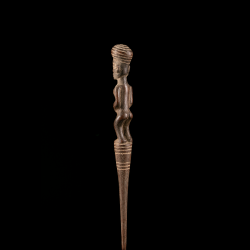
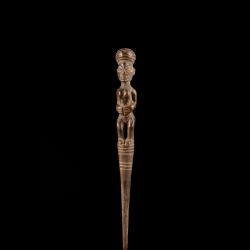
This elegant wooden hairpin, probably Luena (Lwena) from the wider Chokwe cultural sphere, is surmounted by a standing female figure with her hands joined over the abdomen. The rounded coiffure articulated by incised bands, half-closed eyes and restrained pose find convincing parallels in Lwena sculpture.
Among the Tshokwe, the hairpin is known as musako; such ornaments complemented elaborate hairstyles and, more broadly, could participate in the expression of status. The long tapering shaft is punctuated by carved rings beneath the figure’s feet. A deep brown patina, more lustrous on the raised areas, enhances the sculptural presence of this refined personal ornament. Proposed attribution: Luena/Lwena, Chokwe sphere, probably first half of the 20th century.
Data sheet
You might also like
This elegant wooden hairpin, probably Luena (Lwena) from the wider Chokwe cultural sphere, is surmounted by a standing female figure with her hands joined over the abdomen. The rounded coiffure articulated by incised bands, half-closed eyes and restrained pose find convincing parallels in Lwena sculpture.
Among the Tshokwe, the hairpin is known as musako; such ornaments complemented elaborate hairstyles and, more broadly, could participate in the expression of status. The long tapering shaft is punctuated by carved rings beneath the figure’s feet. A deep brown patina, more lustrous on the raised areas, enhances the sculptural presence of this refined personal ornament. Proposed attribution: Luena/Lwena, Chokwe sphere, probably first half of the 20th century.